April 29 - Infectious Diseases
Program
10-1020hr – Welcome, trivia, check in and recap of last week (Max)
1020-1050hr – Neurological presentations – Sarah B
1050-1100hr – coffee break
1100-1130hr – Fever in the returned traveller – Max
1130-1140hr – Ten Minute Tox – Jacqueline
1140-1150hr – ECG of the week – Alex
1150-1210hr – Fever case – Sarah W
1210-1220hr – quick lunch break
1220-1300hr – Infectious Diseases SAQs –Sarah and Jacqueline
Key Learning Points
Weakness
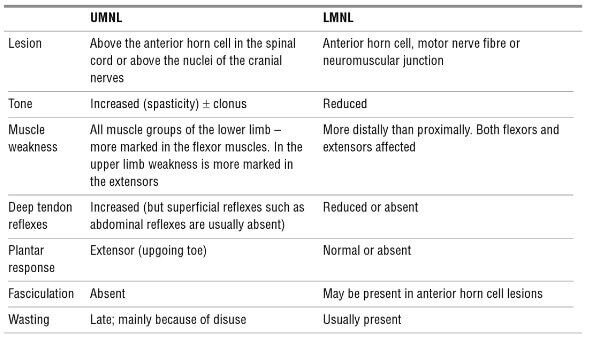
Sarah gave an overview of some common presentations of weakness. This is so easy to examine and the topics below come up again and again in primary and fellowship exams. We all need to know it extremely well. Here are the key points.
UMNL vs LMNL
Spinal Cord Syndromes
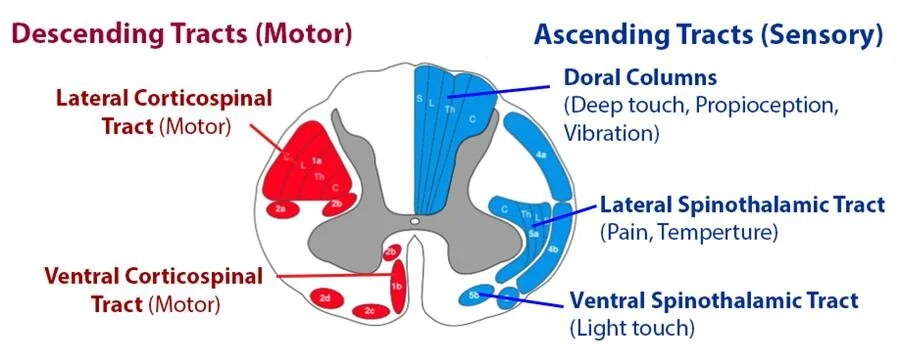
Spinal cord anatomy, knowing this can really help you work out expected neurological deficits in specific injuries
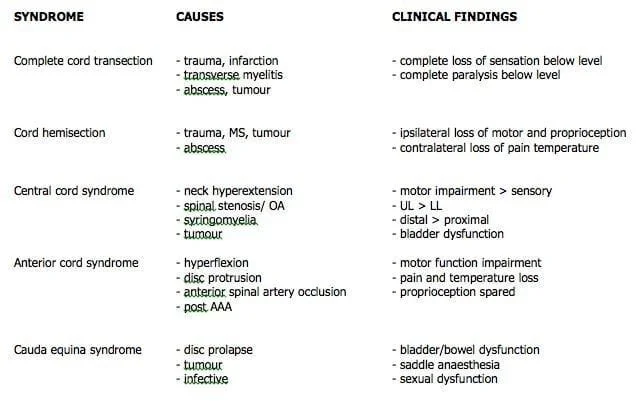
Recently a blank table like this came up in the fellowship exam.
GBS
The classic presentation is of a bilateral, symmetrical limb weakness that is typically ascending
In advanced disease the patient may become areflexic
Sensory symptoms are common but usually not as severe as the weakness
Other important features not to forget include autonomic dysfunction, respiratory failure, and corneal ulceration
There are a number of variants to the classic presentation. Remember the triad of Miller Fisher Syndrome? No? Look it up!
Fever in the returned traveller
Smarttraveller.gov.au is a fantastic resource. Plug in the country the patient travelled to and you can look through which diseases the patient was potentially exposed to
Common diseases to be aware of include: Malaria, Dengue, Enteric Fever (Typhoid), Leptospirosis and Rickettsial disease
An approach to these patients is dependent on a really good quality travel history. Investigations will be determined by this history
Febrile returned travellers warrant discussion with ID and possible an admission for further investigations
Toxicology
Don’t pick you own mushrooms to eat. Just don’t. In Melbourne and Canberra they very well may kill you.
It is Autumn which means that Amanita Phalloides (Death Cap) mushrooms have begun to grow under the oak trees.
A single mushroom can kill. The typical presentations is of gastrointestinal symptoms >6 hours since ingestion. There may be mild elevated LFTs and renal function within the first 24 hours. Then the patient may develop multiorgan failure, particularly fulminant hepatic failure. So what is our approach?
R - Resuscitation usually not required
R - A single mushroom can kill. Find out where the mushroom came from, what time it was ingested. A poisons information centre can help to identify the mushroom.
S - Antiemetics, fluids
I - FBE, U&E, LFTs, Lactate, INR
D - Activated charcoal 50g
E - MDAC (Multi-dose activated charcoal)
A - Not great evidence but NAC, Silibinin, Benzylpeniciilin, rifampicin could play a role
D - Asymptomatic patients with normal bloods at 24 hours can probably go home. Otherwise admit, liver transplantation may be required in severe cases
Blood Gas
A good discussion about ketones was had. See the blog post coming soon on ketones. Also coming soon is a user’s guide to a strong ion difference method of interpretation.
ECG of the Week
A 23 yo male is brought to the ED in a post-ictal state following a seizure. He is hypotensive, BP 90/60.
This ECG and the above history are typical of a TCA overdose.
ECG abnormalities of sodium channel blocking toxicity include:
Broad QRS (>100ms is predictive of seizures, >160ms is predictive of ventricular arrhythmias eg VT)
Terminal R wave >3mm in aVR
R/S ratio >0.7 in aVR
Sinus tachycardia (in TCA overdose due to anticholinergic effects)
Remember there are other drugs that cause sodium channel blockade. These include:
TCA
Anti-arrhythmic drugs - flecainide, procainamide
Local anaesthetics
Propranolol (will cause the above picture but with a bradycardia)
Carbamazepine
Dextropropoxyphene (Di-gesic)
The treatment of this patient would need to occur in a resus cubicle. The antidote is sodium bicarbonate and should be given if there are seizures, arrhythmias, broad QRS or hypotension. The dose is 1-2mmol/kg and given IV over 2 minutes. If you give one bottle of 100mls of 8.4% NaHCO3 it would be an appropriate dose for most patients. Patients should be intubated early for both airway control during anticipated seizures but also to hyperventilate the patient to a pH of 7.5 to 7.55
Other treatments include diazepam for ongoing seizures, lignocaine for arrhythmias not responding to NaHCO3 and hypertonic saline if the pH is already 7.55 and the patient is not improving.
What is this?
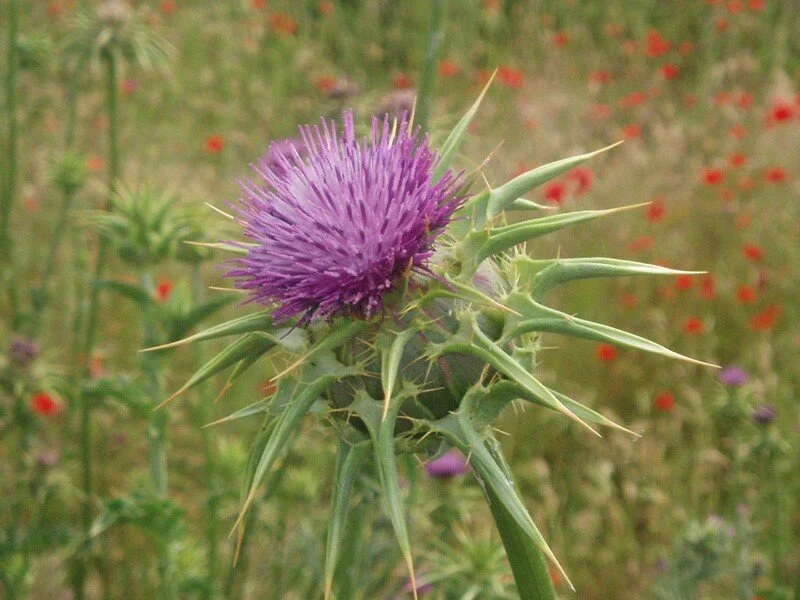
What is this?
Hints:
Why would a toxicologist be interested in something so milky?
Why does Alex sometimes calls his three-year-old the same thing?
Confused? Jacqueline will reveal all in this week’s session
This is milk thistle, scientifically known as Silybum Marianum. It contains Silibinin which is a suggested antidote for amanita mushroom toxicity.