Mechanical Ventilation in St Vincent’s ED
Alex Handrinos
Ventilating sick patients can be extremely challenging - to the novice, it can be quite overwhelming. Although much has been said, published, lectured and taught it can be hard to find resources that are most relevant to our setting.
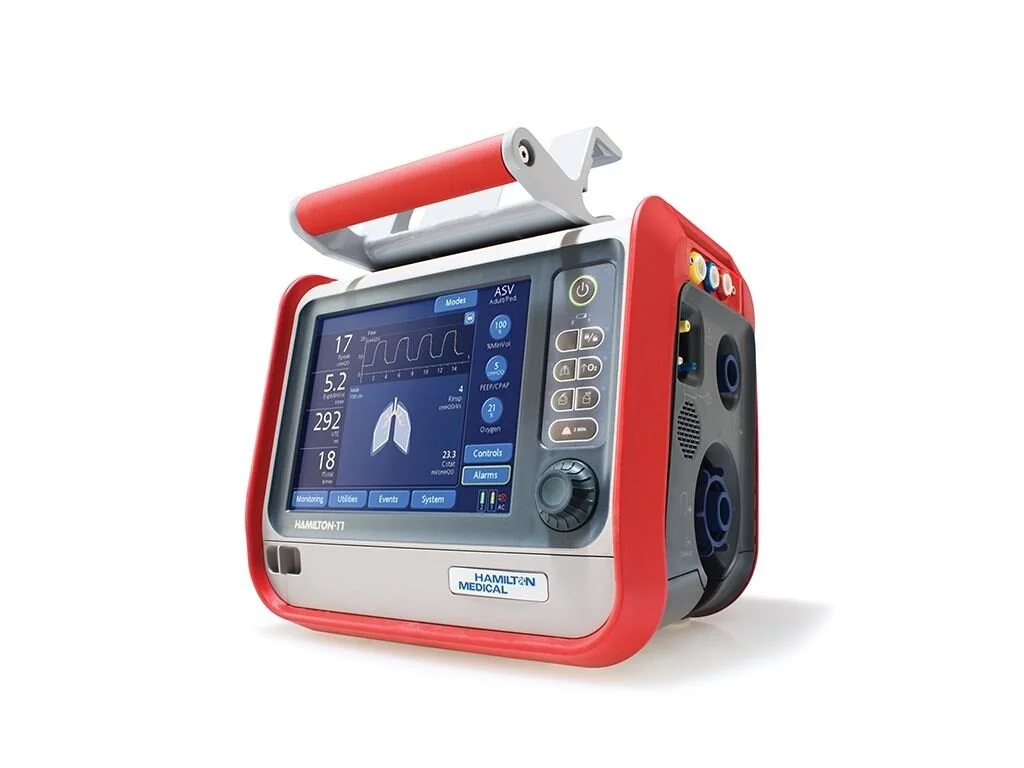
In the ED at St Vincent’s we use Hamilton Medical transport ventilators. These ventilators are relatively straightforward to use, can be used for all ages and are also used for non-invasive ventilation. They can be used in a helicopter, in the rain, on battery power and without an oxygen tank if the situation arises. Yes, I have once intubated somebody on a hospital building roof.
Here are a collection of some resources that I think are very useful, particularly if you are in a phase of growing your knowledge and familiarity with mechanical ventilation - who am I kidding, we are all in this phase.
First, start by reading this short article by Scott Weingart. Although just one person’s opinion, it is a safe place to start.
Managing Initial Mechanical Ventilation in the Emergency Department
This first video shows the basic settings of the Hamilton ventilator that we use. Enjoy his wonderful, geeky Ned Flander’s voice. There are several more videos through the Hamilton Medical website available to review. You can also sign up for free at the Hamilton website for access to a bunch of learning modules from the very basic through to complex ventilation.
During 2020, a COVID ventilation protocol was developed where patients were placed straight onto the ventilator as soon as the tube was passed through the cords. We found that in a number of cases, it took the ventilator some time to reach the required tidal volumes - this was not ideal in such sick patients, and a particularly idiosyncrasy of our ventilators. I gave this short talk to explain the possible benefit of a pressure controlled mode in this situation.
Troubleshooting
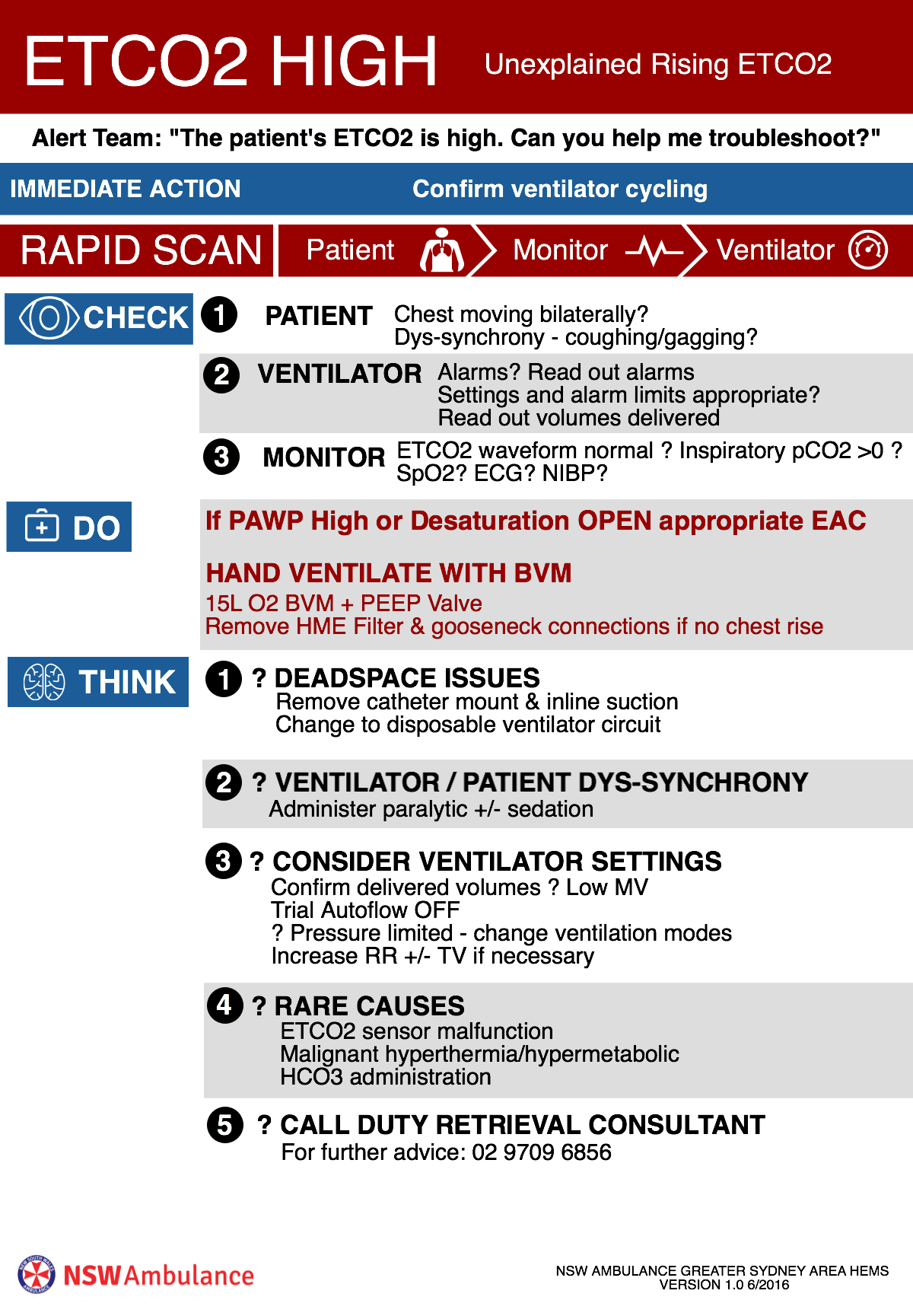
So you have begun ventilating the patient but now the alarms start going off. The most common issues are hypoxia, hypotension, high airway pressures or high ETCO2. Often, it is a combination of the above. Having a framework for how to deal with these issues can significantly reduce our own anxiety and stress levels. It will probably benefit the patient too.
Take a look through these NSW HEMS action cards. Click to enlarge.
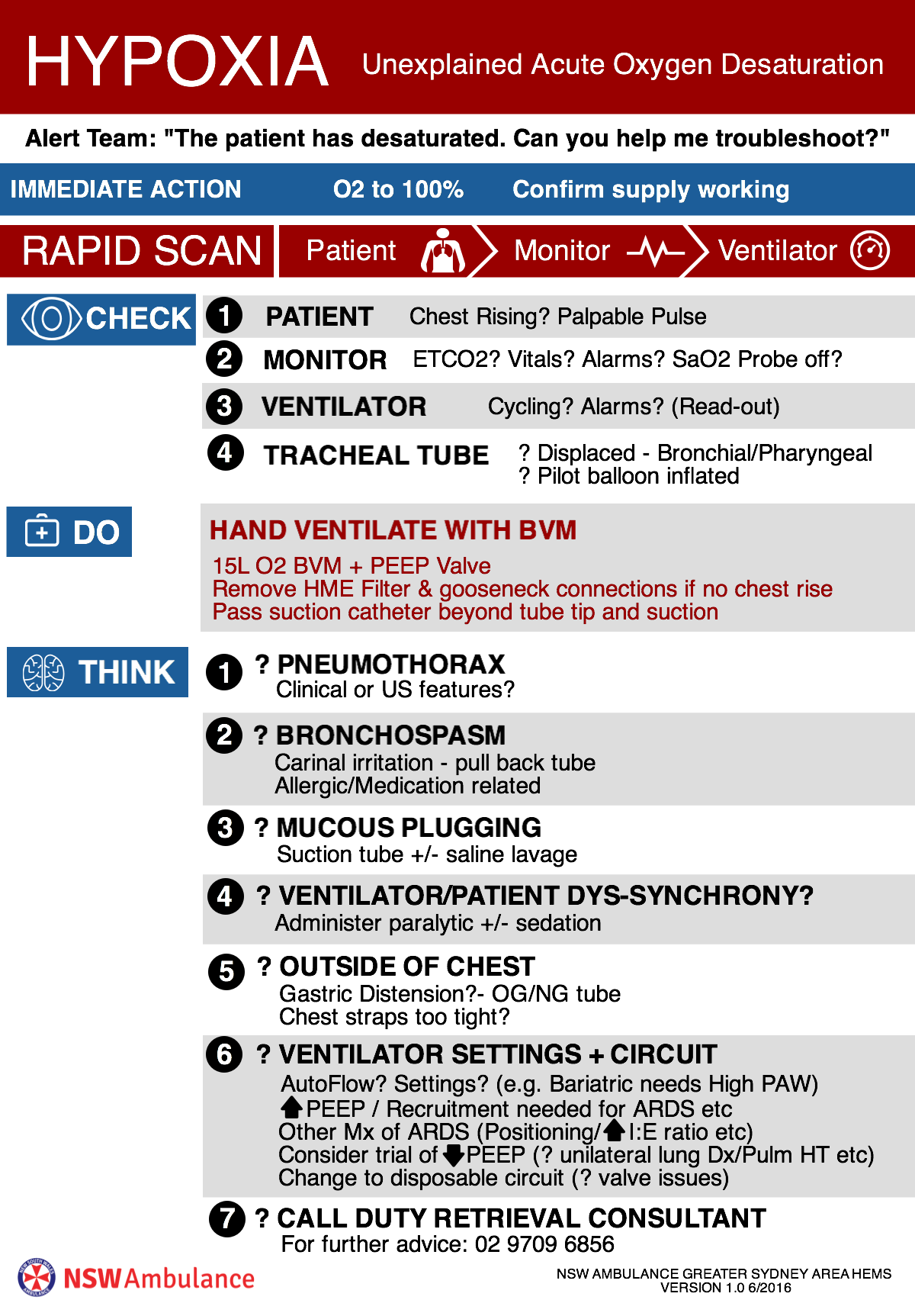
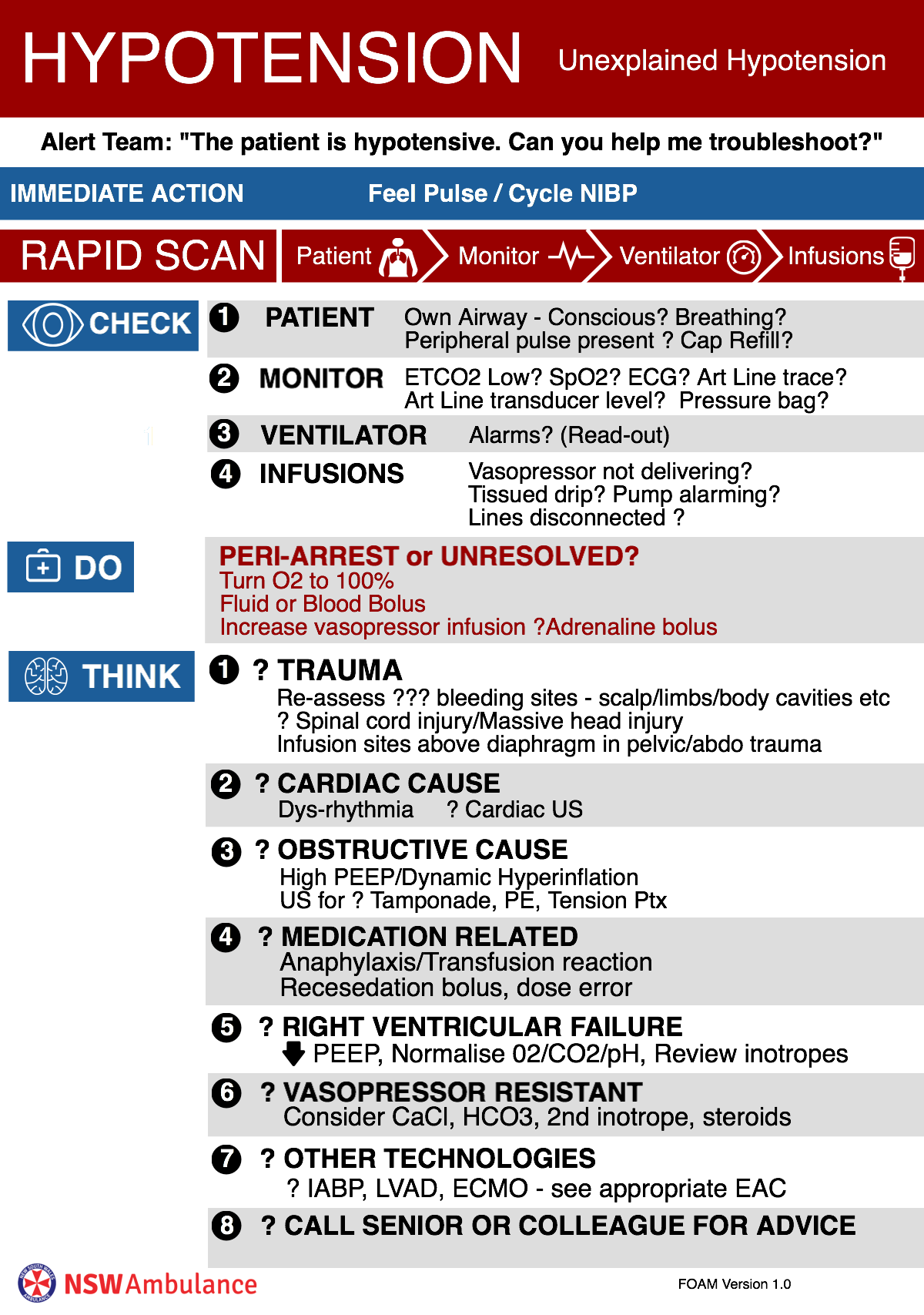
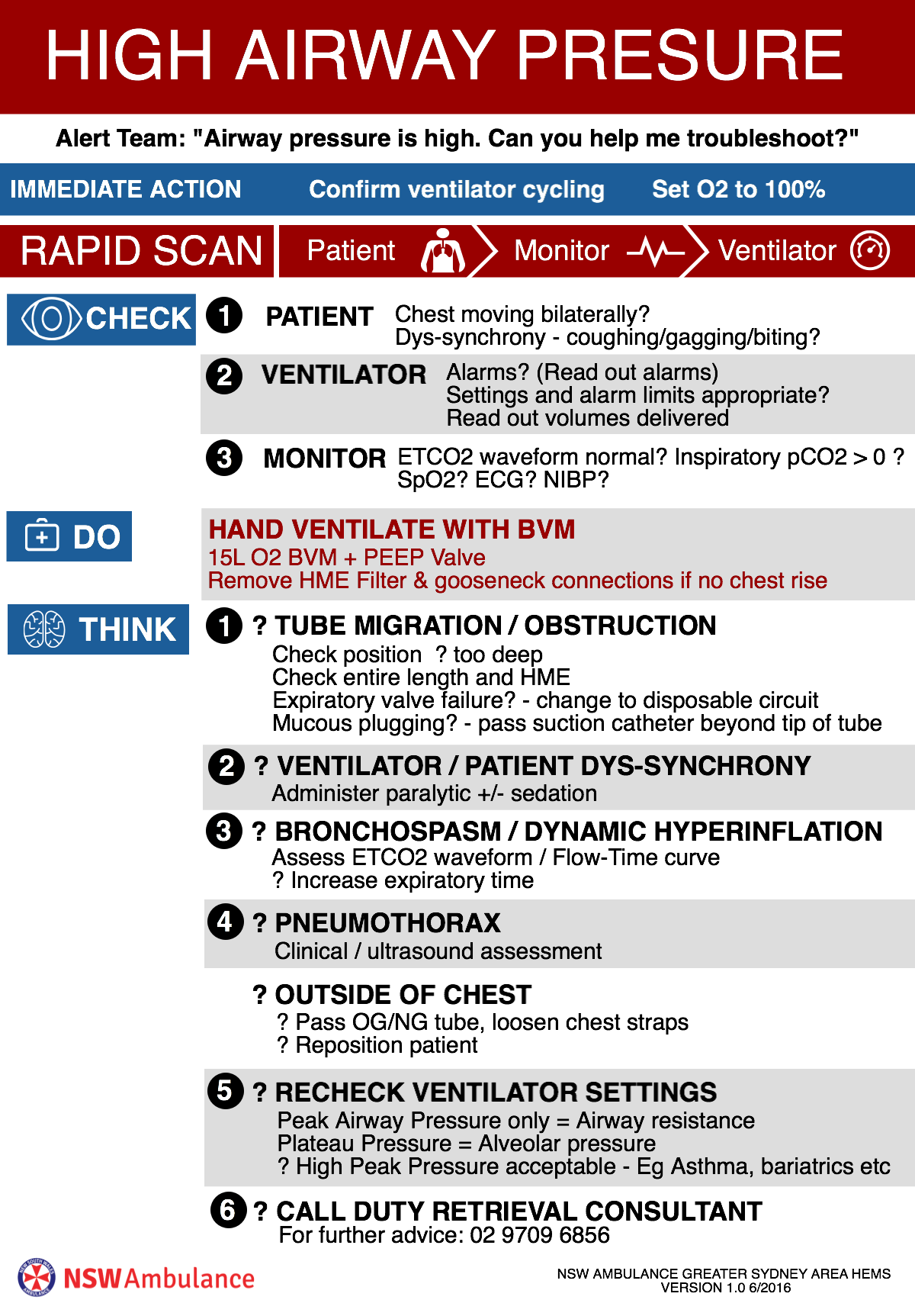
For causes of post intubation hypoxia I remember the acronym DOPES
Displacement of the ETT - right bronchial intubation, oesophageal intubation
Obstruction of the ETT - blood
Patient - pneumothorax, PE, pulmonary oedema, collapse, bronchospasm etc
Equipment - ventilator problems
Stacked Breaths