
Program
10-1100hr – Upper Limb Injuries- Jarrad Stevens
11-1115hr – Recap of last week, Hope
1115-1145hr – Urogenital infections – Jess
1145-1200hr – coffee break
1200-1230hr – Dialysis Emergencies – Andrew Catran
1230-1300hr – gas/ECG/image of the week
1300-1330hr – Introduction to the Inreach service/Geriatric Registrar - Lannie Ho and team
1330-1400hr – catch up time, case discussion TBA
1000-1200 - OSCE Group - Education Centre
1315 - 1445 - Simulation Session - Andy, Chris, Jonathan
1330 - 1500 - Ultrasound with Mark - Contact him directly to organise
Upper limb injuries - Jarrad Stevens
Some key points
Mid shaft clavicle fractures managed conservatively are best with a broad arm sling rather than a collar and cuff.
Lateral clavicle fractures are often managed surgically
Surgical neck of humerus fractures - usually managed with a collar and cuff sling for 2-3 weeks. The patients is allowed pendular activities initially
Distal third humerus fractures are high risk for radial nerve injury
Key steps to distal radius fracture reduction
Step 1: Traction
Step 2: Exacerbate the deformity
Step 3: Reduce the fracture
Step 4: Three point cast fixation
ECG of the Week
A 24 yo female BIBA with confusion after an unknown overdose.
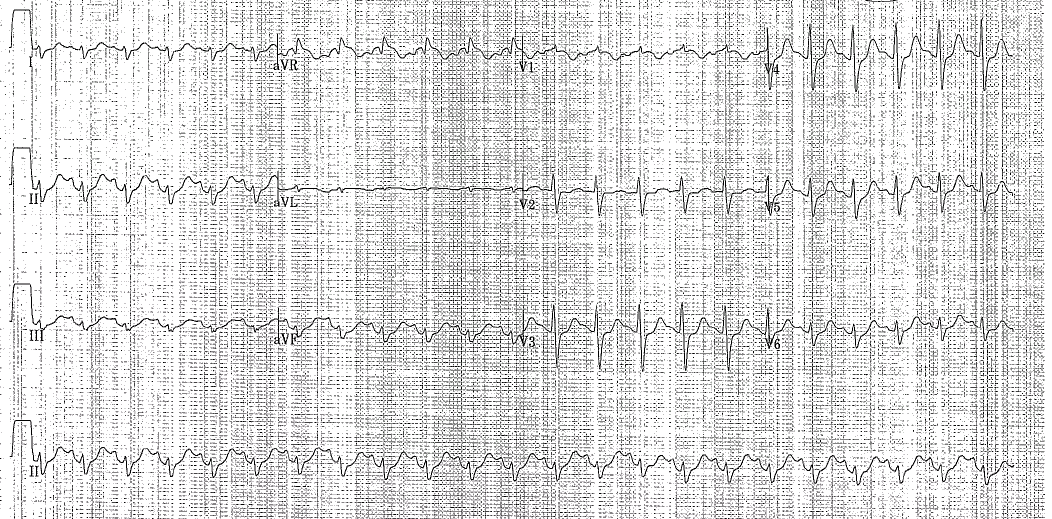
When considering an ECG in the context of toxicology remember to look for the following:
Bradycardia or tachycardia
Presence of any heart block
QT prolongation - predictive of torsades
QRS duration - widened in sodium channel blocker toxicity. > 100ms predictive of seizures, > 160ms predictive of VT
This ECG is consistent with TCA toxicity. There is a sinus tachycardia, widened QRS and a RS ratio great than 0.7 in aVR. Urgent treatment should include administration of sodium bicarbonate.
Image of the Week
A 28 year old male presented with 1 hour history of sudden throat discomfort / foreign body sensation. He had an altered voice on presentation and was otherwise systemically well.
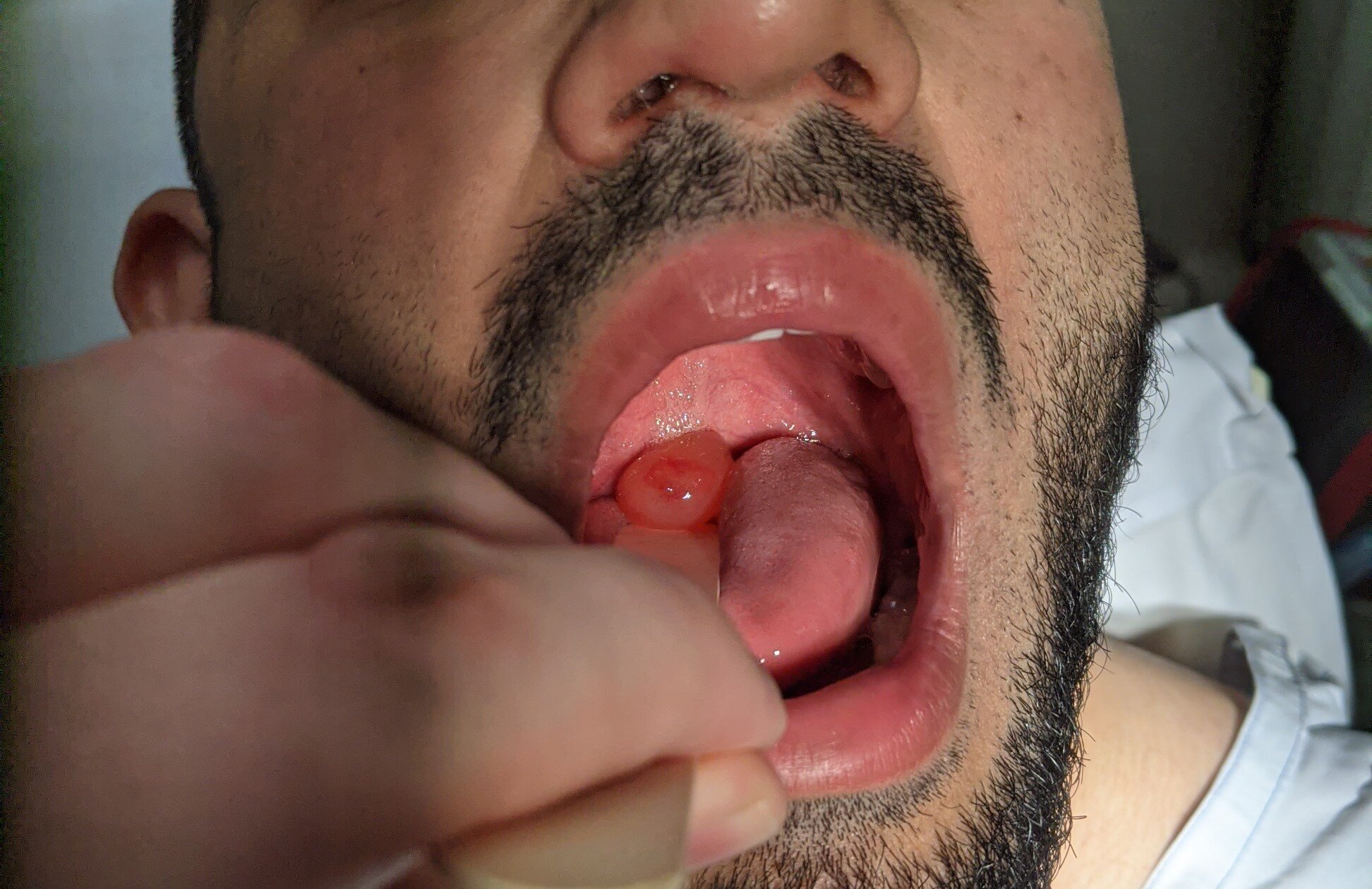
This was a presentation of acute uvulitis.
Causes include:
Infections - similar organisms to pharyngitis
Trauma
Angiooedema (Quincke’s disease)
Inhalant irritation
Allergy
Management was with steroids and an early call to ENT. If this patient was critically unwell you could consider a dose of adrenaline (nebulised or IM)
Gas of the Week
A 27 year old man is brought in to your ED after being found collapsed at home. On examination he is comatose with a GCS of 7 (E1, V2, M4)
HR 105, BP 130/80, RR 38, Temp 37
Arterial blood gas attached. Albumin normal.
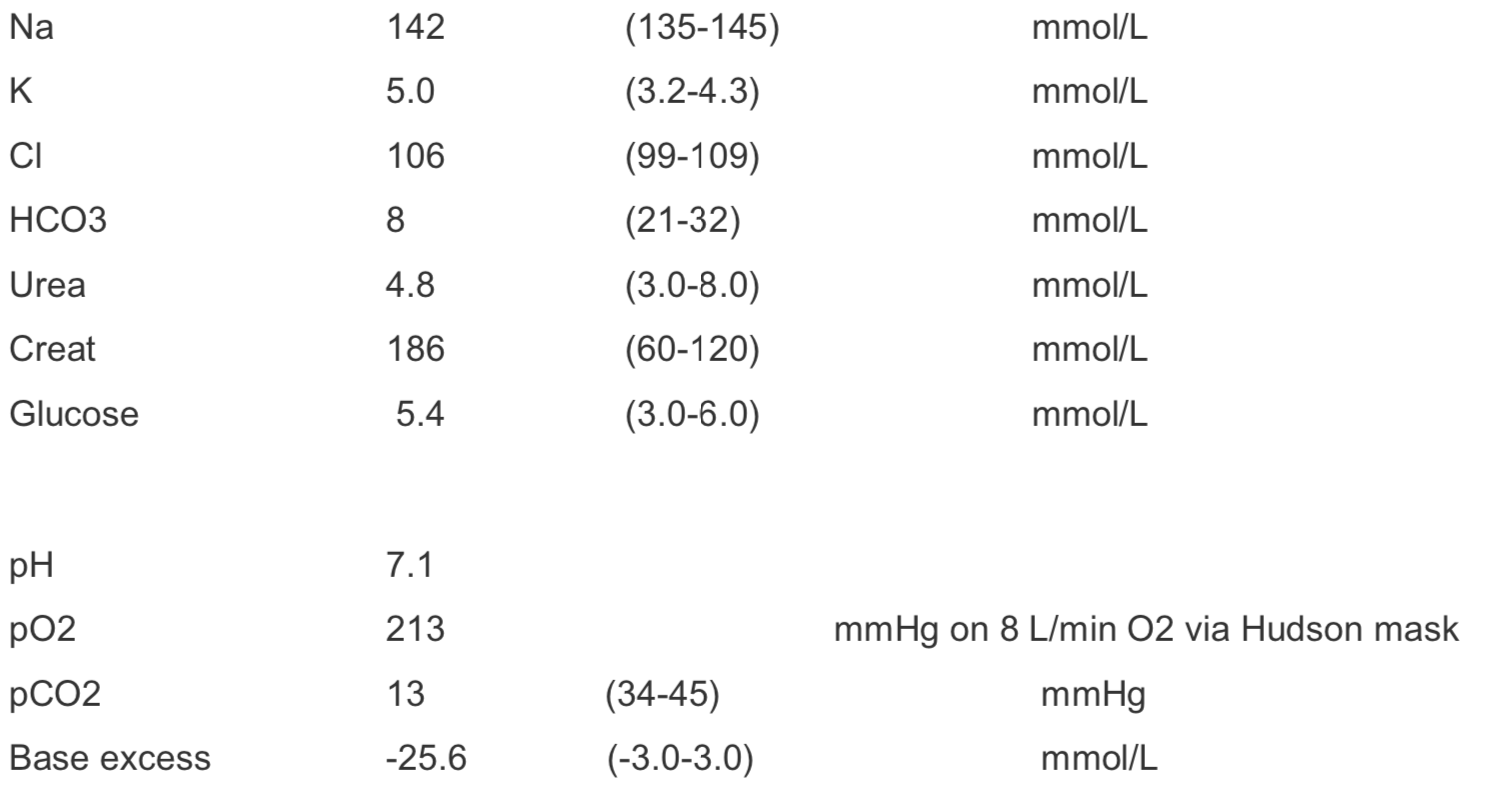
What real gas doesn’t have a lactate! Unfortunately, this example came from a previous exam where they chose not to give it to us. Rude!
There is a severe metabolic acidosis
AG - 142 -106 - 8 = 28
Delta ratio = (28-12)/(24-8) = 16/16 = 1.
Expected Co2 = 1.5 x 8 + 8 = 20
Aa gradient = 450 - 1.25x13 - 213 = 221.
Other findings
Expected K is 6.5 so there is a mild relative hypokalaemia. The other way of looking at this is that the corrected K is 3.5 which is within the normal range.
There is a moderate degree of renal impairment with a raised creatinine.
The patient is hyperoxic
Fencl-Stewart
SID = 142 +5 - 106 = 41, negligible chloride effect
Albumin effect = 0
Lactate effect - ? Unknown
Ketones - unknown
Interpretation
There is an isolated HAGMA
Causes include lactate (unknown), toxicology, renal impairment or ketones (starvation or alcohol given normal glucose).
There is a mild respiratory alkalosis.
There is a raised Aa gradient suggesting VQ mismatch - ? Aspiration, ? Pneumonia, ? Atelectasis
This patient is critically unwell and requires further history and examination to determine a cause. ? toxicological - this gas would fit with salicylates, ? Cerebral event with a prolonged period of time on the floor.