2 September 2020 - Gynaecology
Program
1000-1015: Welcome and recap (Kimson)
1015-1145: Forensic medicine and an approach to sexual assault: Nicola Cunningham
1145-1200: Break
1200-1230: Gynaecological infections, non pregnant PV bleeding; Maria
1230-1250: ECG/ Gas / Image of the week: Alex, Maria and Mark
1250-1300: Break
1300-1330: Radiology: Approach to CXR: Edward Yeoh (radiol reg)
Then depending on time: SAQ and primary viva
Summary
Sexual Assault
This talk was full of amazing information. Here are some of the key messages:
There are forensic registrar positions at VIFM which are accredited for ACEM. These jobs are fantastic - please contact Nicola for more information.
Sexual offences are significantly under-reported. Sexual offenders are known to their victim in up to 75% of cases. There is often no physical signs of an offence. Severe vaginal injuries are rare. Injuries are subtle, easily missed and heal rapidly.
In terms of photographing injuries, Nicola’s suggestion is that the patient should take the photos themselves on their own phone which they can then hand over to the police. This makes the chain of evidence far simpler.
In patients who presents to the ED with sexual assault:
The immediate care of the patient in the ED should not differ when the triage note states “sexually assaulted”.
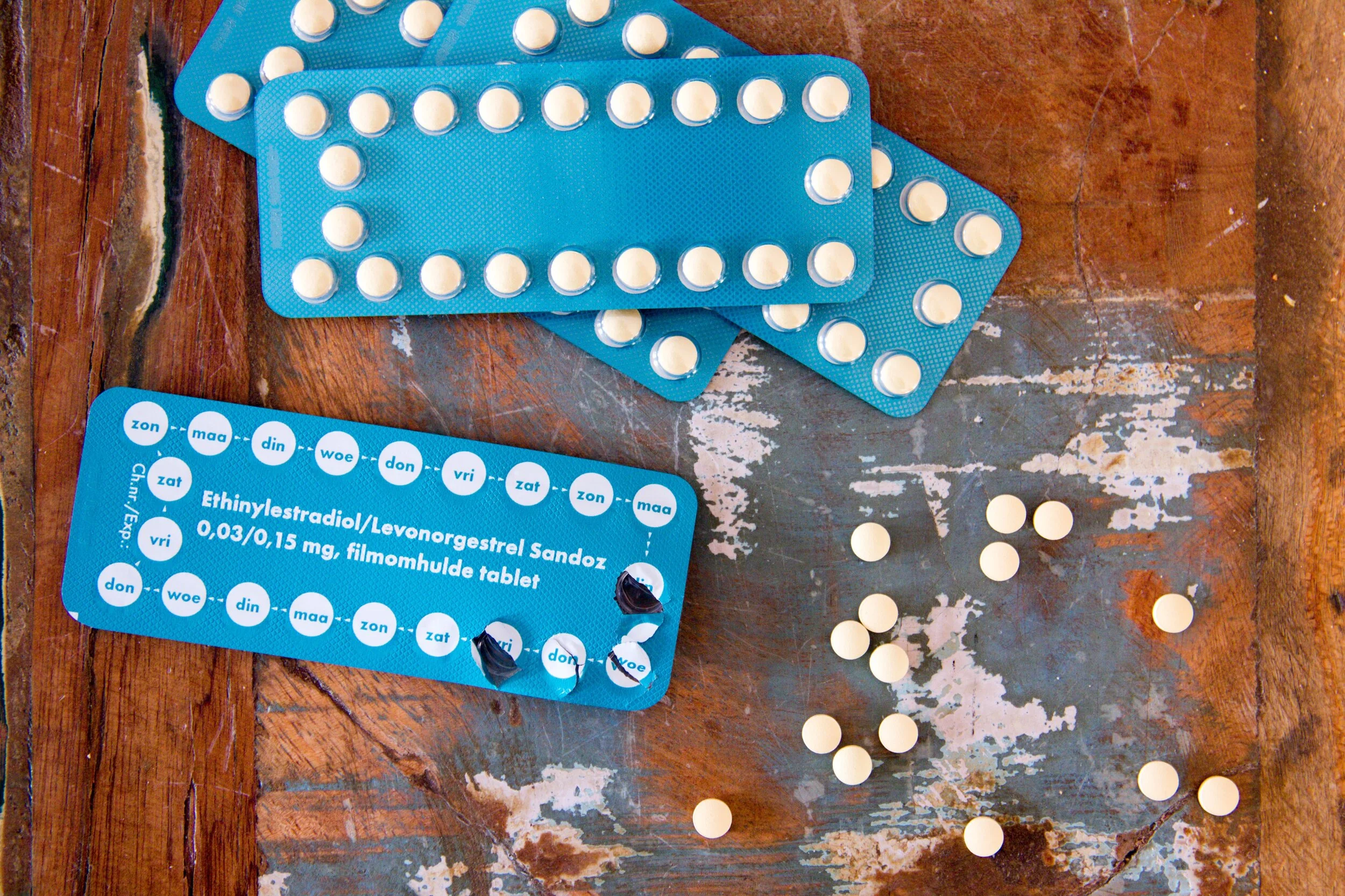
Consider STI testing and prophylaxis as well as emergency contraception
Medical treatment takes priority over forensic integrity, just do your best to preserve evidence
If we have a patient with suspected sexual assault and want advice - call VIFM. We may also need to call local police - they will need to be involved if VIFM are going to perform a forensic examination. There are various Centres against sexual assault (CASAs) across Melbourne. They provide social support and follow up for the victim. They also run the space where VIFM can attend to assess a patient so also need to be involved. However, the CASAs are not able to provided specific advice on investigation or management.
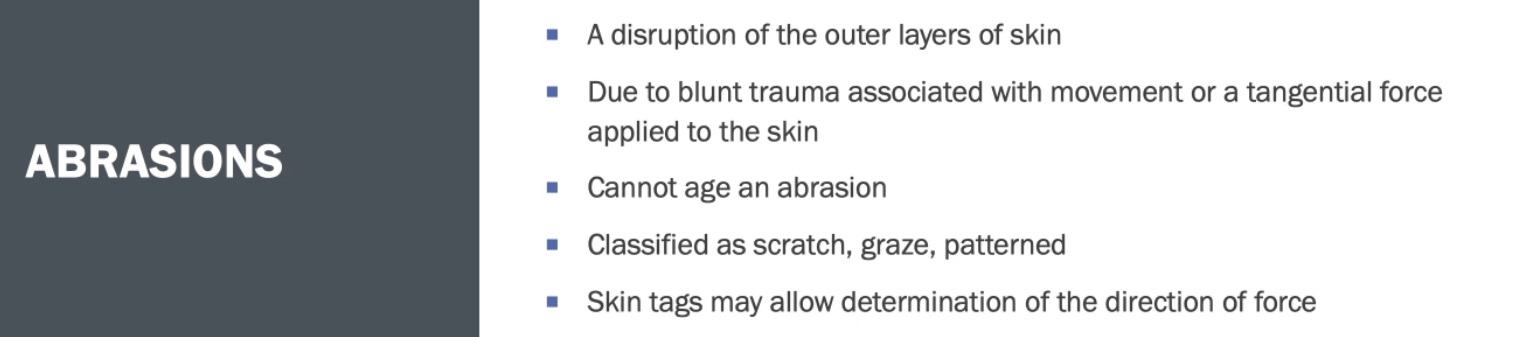
Documenting injuries
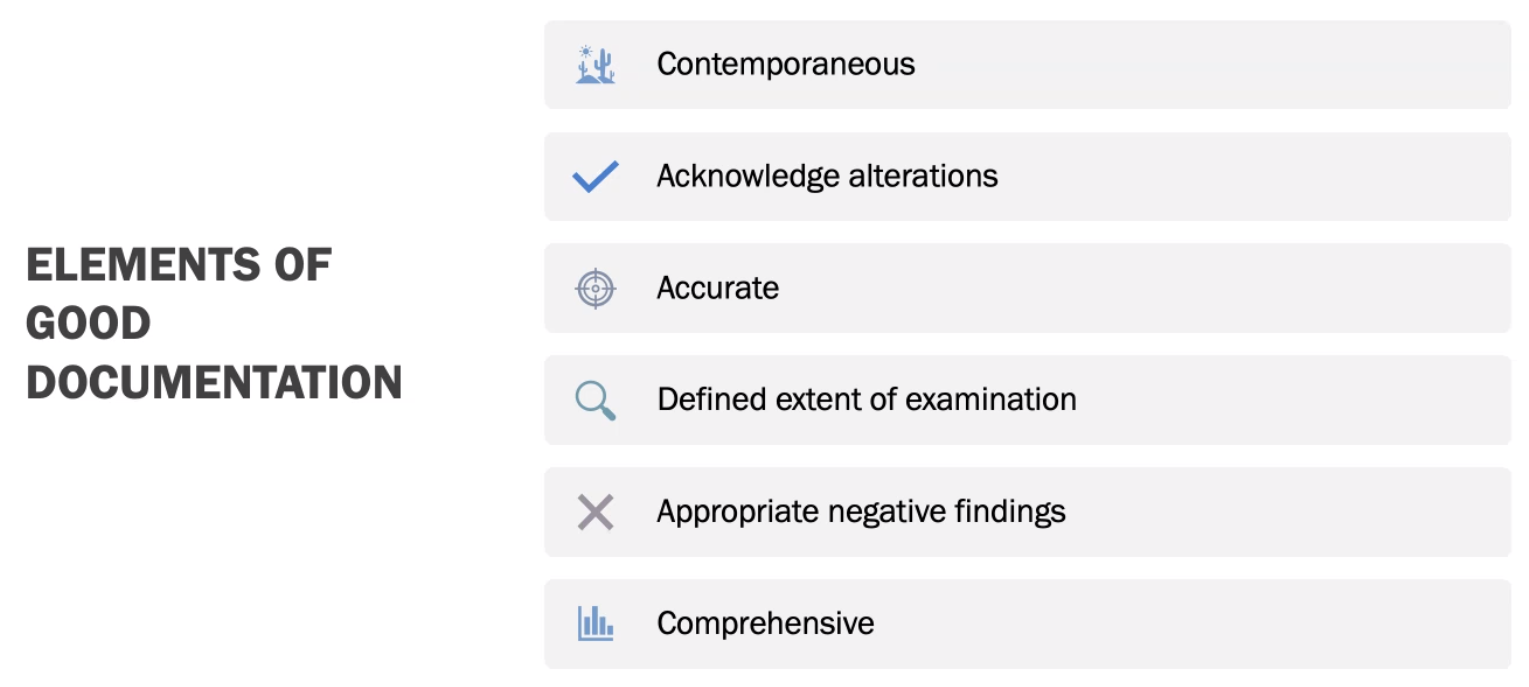
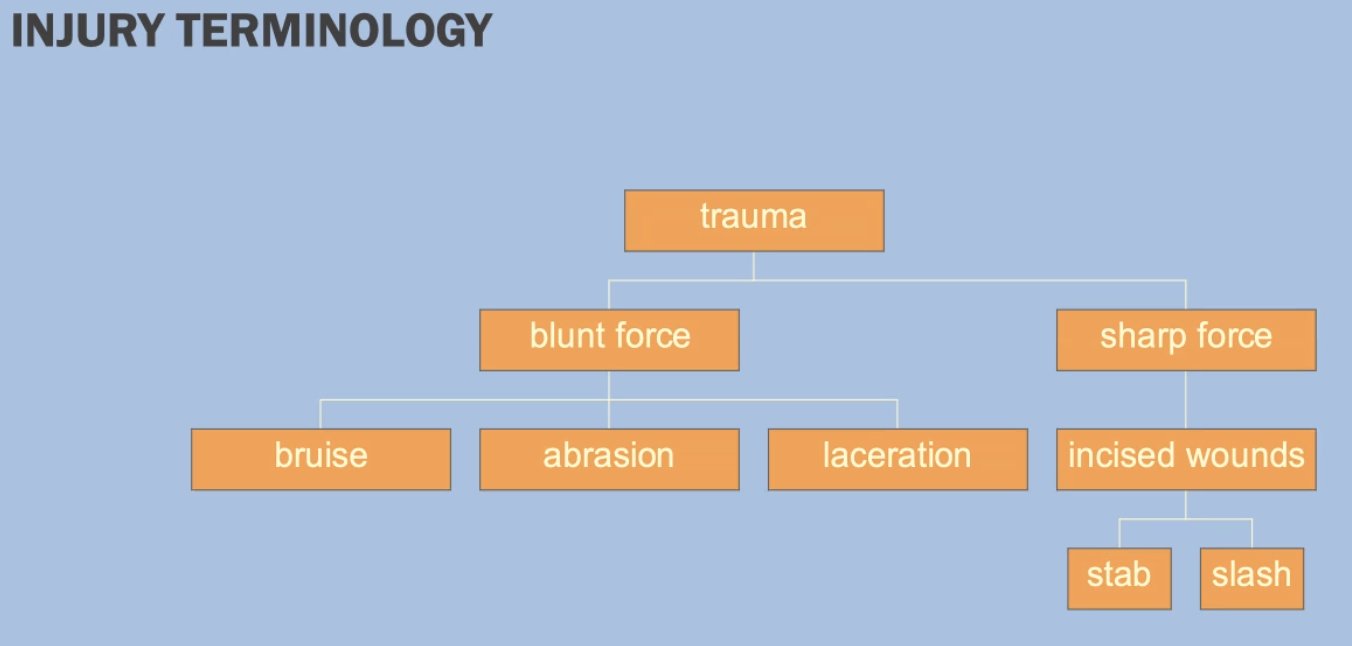
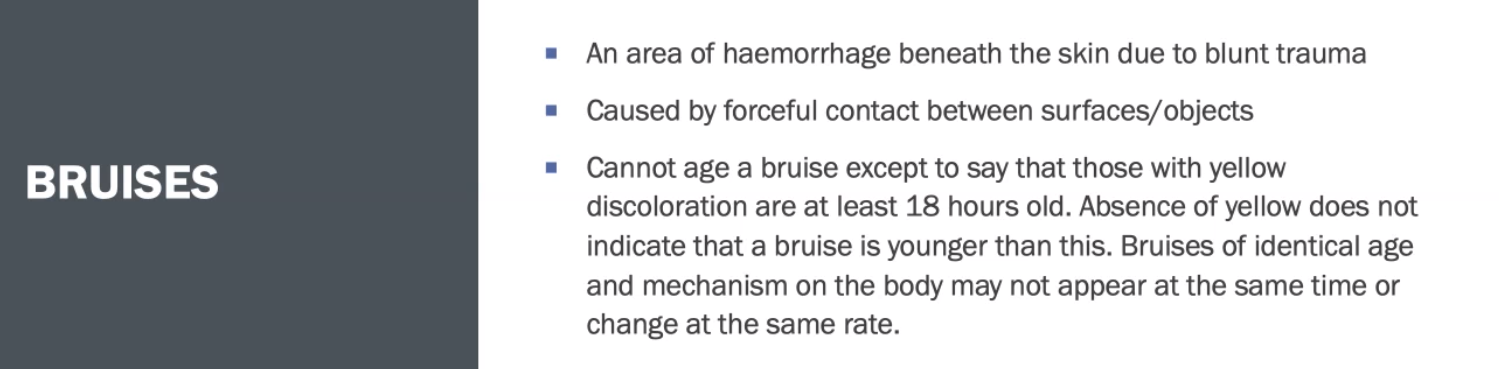
Documenting injuries is really important in the ED for a number of reasons. If we are ever required to attend court our documentation is critical.

Sexual Health
sti.guidelines.org.au and therapeutic guidelines have up to date treatment suggestions
Testing for chlamydia and gonorrhoea in females
Endocervical swabs are the gold standard tests
Urine PCR and endocervical swabs are both > 95% sensitive for chlamydia
Urine PCR is only 56-70% sensitive for gonorrhoea compared to 94% for an endocervical swab
A self-collected low vaginal swab is superior to urine PCR
Urine PCR should only be used if endocervical or self-collected vaginal swab is not possible
In males, send a first pass urine sample
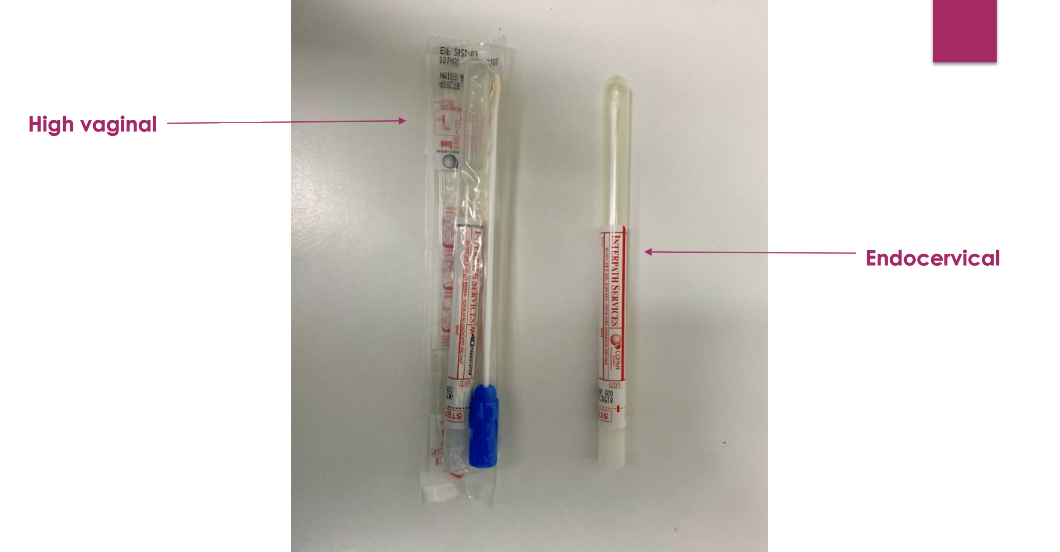
Which swab to use at St V ED?
ECG of the Week
Thanks Tom for the case.
A 25 yo male presented to the ED with several days of intermittent chest pain. He was streamed to the sCOVID zone as he had a viral sounding respiratory illness for the past 4 days. He was pain-free on review, looked well and his vital signs were normal. Here is his initial ECG.
With all ECGs we need to ask ourselves what is the clinical implication - in this case, why is there ST elevation?
The answers posted by the below anonymous person were so great that I have included them below with my comments in italic.
Describe the ECG: ECG Features
• Sinus rhythm approx 75bpm
• P waves for every QRS
• Normal axis
• Normal R wave progression
• Diffuse ST elevation – ant/inf/lat
• No reciprocal changes (no ST dep/TWI in adjacent leads)
Could this be benign early repolarisation? What features are for or against this differential?:
- For: ST elevation in anterior leads > 2mm ***(Actually BER usually, but not always, has <2mm in precordial leads and < 0.5mm in the limb leads so the ST elevation in this ECG goes against BER)
- For: no reciprocal ST depression
- For: J point notching inferiorly / anteroseptally
- For: clinical stem; 25 year old patient – BER is common variant in young, rare > 50
- Against: limb leads in BER rarely exhibit ST elev > 0.5mm
- Against: BER typically most pronounced in V2-V5
- Against: ST / T ratio in V6 = 0.33 (BER < 0.25, pericarditis > 0.25)
Could this be pericarditis/myocarditis? What features are for or against this differential?:
- For: diffuse ST elevation
- For: ST / T ratio is > 0.25
- For: clinical picture; young patient with respiratory/viral illness, intermittent CP
- For: normal T waves (more prominent in BER)
- For: marginal PR depression
Diffuse STE often greatest in V3-V4. Use the ST/T wave ratio to differentiate BER from pericarditis. (ST = height of ST-segment as measured from J point; T = T wave amplitude in V6)
• ST/T < 0.25 = BER
• ST/T > 0.25 = Pericarditis ***(i.e. relative more ST elevation than in BER)
Could this be a STEMI? What features are for or against this differential?:
- Against: diffuse ST elevation (multiple vascular territories)
- Against: no reciprocal ST depression / no TWI
- Against: clinical picture; young patient, pain free, looks well, normal vitals
This patient had a troponin of 14000 and was diagnosed with myocarditis after a normal angiogram.
Image of the Week
A 24-year-old student with a history of depression is brought in by ambulance after his housemate found him in the kitchen with a self-inflicted stab wound. He is haemodynamically stable on arrival.
There is a penetrating wound to the left lateral neck in the posterior triangle. It can be classified as within zone two of the neck.
There are a number of structures that could be injured in this patient.
Vascular: Carotids, vertebral arteries, jugular vein
Nerves: Vagus, recurrent laryngeal nerve, spinal cord
Airway: Pharynx, Larynx, Trachea
Other: Oesophagus
There is a brilliant post on penetrating neck injuries on RebelEM.
Gas of the Week
Thanks Khalid for the gas this week.
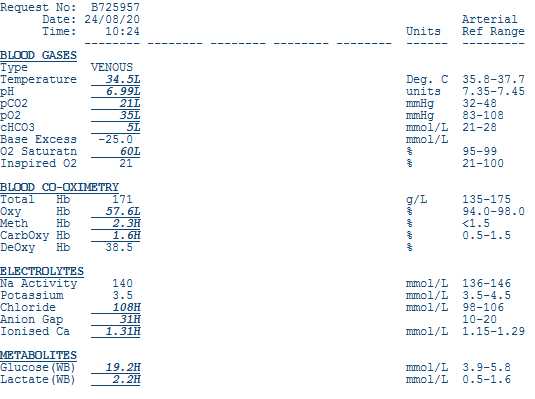
A 32 yo male BIBA from prison with poor oral intake and vomiting for the past three days.. No known medical history. Vital signs on arrival” GCS 13, HR 110, BP 95/60, RR 30, SPO2 98% RA,
Albumin = 50g/L
Creatinine = 121
Urea = 9.0
eGFR = 67
This patient has a severe metabolic acidosis with low pH and base excess.
Fencl-Stewart
SID = 36 therefore hyperchloraemic acidosis contributing -6 to the base excess
Lactate effect -1
Albumin effect -2
The sum effect is -9 but the measured base excess is -25 so there must be another significant effect of weak acids - in this case, likely ketones.
Traditional
AG = 27 (or 30 if you include K)
Delta ratio = (27-12)/(24-5) = 15/19
Therefore there is a HAGMA and mild NAGMA
Other things to note include hyperglycaemia and a relative hypokalaemia (expected K = 7 for this pH, alternatively you could say the corrected K is 1.5)
Corrected Na for glucose = 145
Clinical interpretation
There is a likely ketoacidosis - ? new DKA. Could this be alcohol or starvation ketosis? Glucose can be high in all three of these conditions.
The hyperchloraemia could have been caused by excess sodium chloride if this was given as part of his resuscitation or by renal tubular acidosis given the abnormal renal function. Note that in alcohol ketosis there is usually hypochloraemia due to vomiting. The patient’s hyperalbuminaemia is likely from contraction (poor water intake, vomiting and water loss from glycosuria).
This patient requires treatment for DKA including potassium replacement. A thorough drug and alcohol history is required. Is this patient withdrawing precipitating this event?