28 July 2021 - Gynaecology & Wellbeing
Teaching this week will be on Microsoft Teams:
Program
Get your leg warmers and tights on for an online wellness workout! It’s farewell to lots of people moving on and as we can’t breakfast, we are going to boogie.
1000-1015: Recap — Ezra Limm
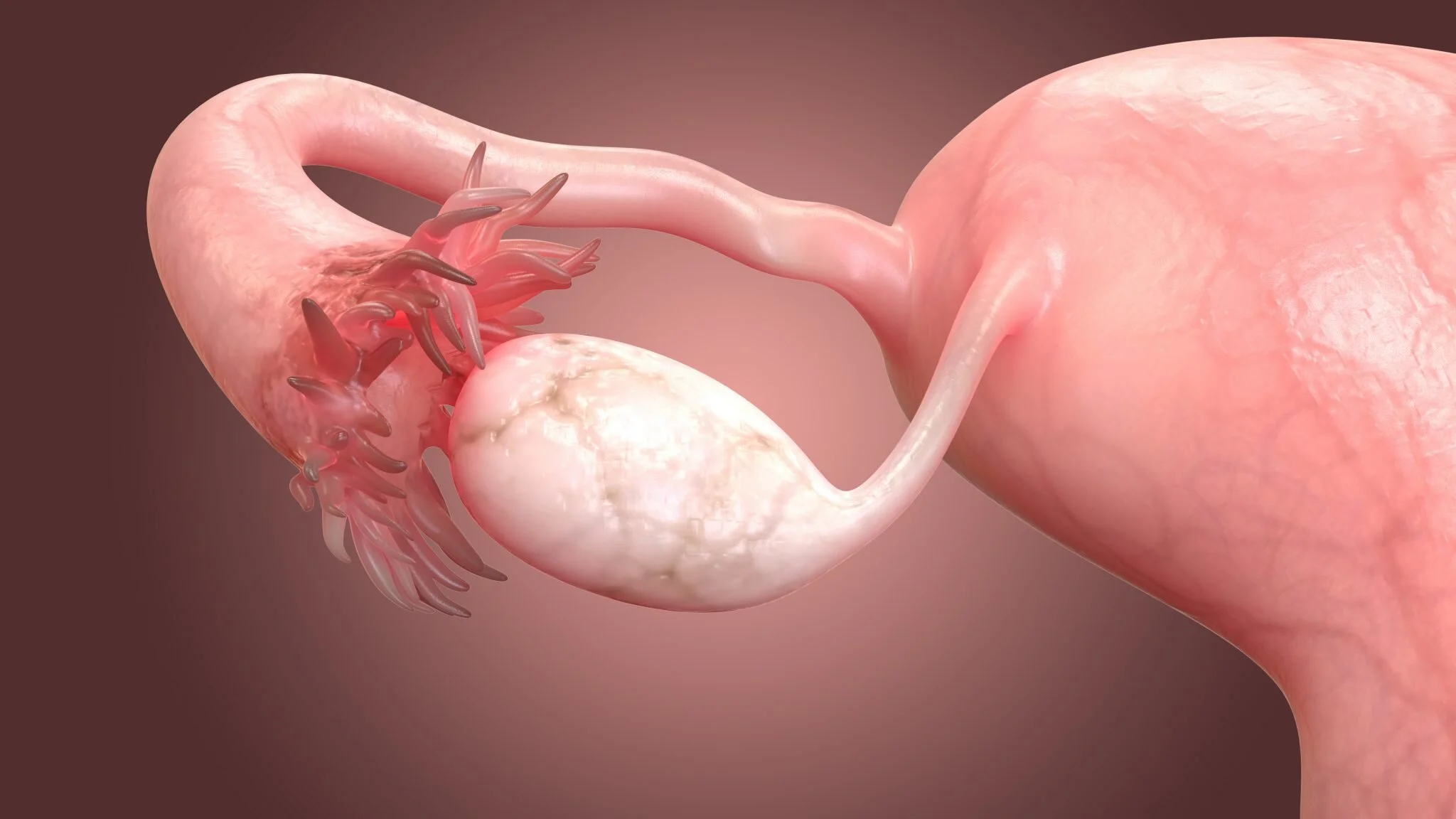
1015-1045: Is It Ovarian Torsion? — Gemma Ridley
1045-1100: ECG of the Week — Jannet Chan
1050-1100: Image of the Week — Ezra Limm
1100-1145: Online Wellness Workout — Cleo is a professional personal trainer with Get Going
1145-1215: Priapism (the other gynae) — Marty Lynch
1215-1230: Break
1230-1300: So You Think You Know Gases — Mark Rugless
1300-1330: Journal Club “Novel Score for Stratifying Risk of Critical Care Needs in Patients With Intracerebral Hemorrhage” — Hamed Akhlaghi
1330-1335: Registrar term feedback
1330-1400: Ultrasound Masterclass — Mark Rugless (email Mark if interested)
1330-1400: Fellowship OSCE Group — Brendan Morrissey
1330-1400: Fellowship Written Group — Alex Handrinos
1330-1400: Primary Group — Private study
1400-1500: ITAs with Sarah and Jacqueline as arranged
ECG of the Week
23M presents with palpitations. He has a history of an eating disorder. He takes no regular medications.
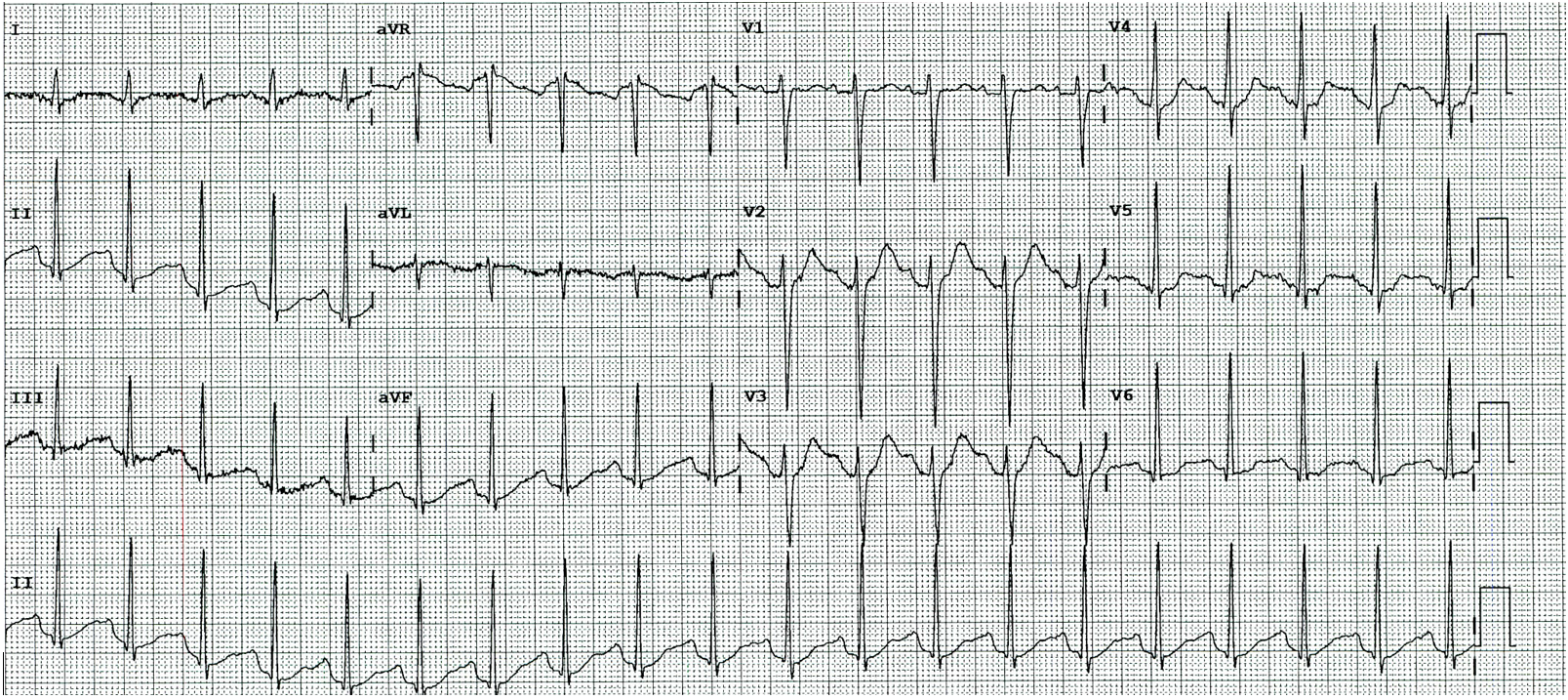
1) Other than tachycardia, what is the abnormality on this ECG?
Long QT
2) What is the most likely cause for this ECG abnormality in this patient? Give 3 other alternative causes for this abnormality in any patient.
The most likely cause is hypokalaemia. Alternatives include:
Hypothermia
Hypocalcaemia
Hypomagnesaemia
3) List 4 classes of drugs that can precipitate this ECG abnormality.
Antibiotics — i.e. macrolides like azithromycin
Antipsychotics — e.g. droperidol, haloperidol
Antidepressant — e.g. amitriptyline
Anti-emetics — e.g. ondansetron
Anti-arrhythmics — e.g. procainamide, amiodarone, sotalol
Image of the Week
33F presents with a bilateral lower limb rash, covered in blankets. She is not obese. She has no history of lymphoedema or CCF. She thinks maybe her GP said she had gout a few years ago. She is afebrile. Her inflammatory markers are WCC 9 and CRP 36.
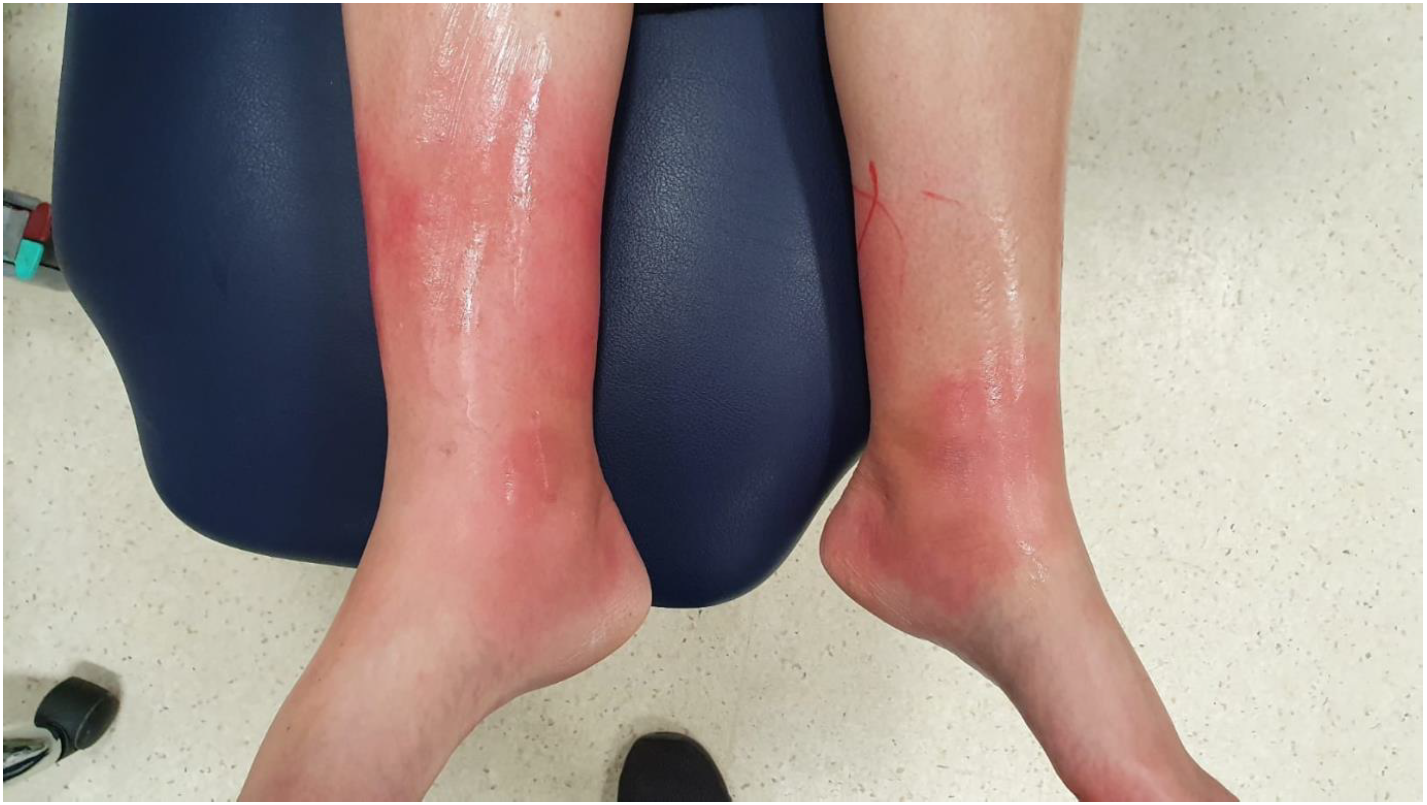
1) What is the diagnosis?
Erythema nodosum
2) What features from history and examination are indicative?
Appears as tender red ill-defined nodules over 10 days
Usually 6 - 12 in number and 1 - 10 cm in diameter
Slightly raised
Do not ulcerate
Fever, malaise and arthralgia
Risk factors
History of IBD
Recent throat infection
Sulfonamides
Pregnancy or OCP
Lymphoma or leukaemia
3) What is the treatment?
Leg elevation and compression stockings
NSAIDs
Prednisolone 25mg daily for 2 weeks
NOTE: Limited benefit of ultrasound — can look identical to cellulitis
Usually resolves over 2 - 3 weeks.