
17 February 2021 - Regional Teaching
Monash Paediatric Emergency Medicine Regional Teaching Program
The event will be held virtually online at 0945. You will need to download the Cisco Webex Meetings application to attend.
Link to event: Monash PEM Regional Teaching 2021
Event number: 165 255 4832
Event password: MMCPEM2021
0945-1000: Welcome
1000-1030: Paediatric Ophthalmology - Dr Rathika Kandasamy, Ophthalmologist
1030-1100: Paediatric Dental Trauma - Dr Beverly Thompson, Emergency Physician
1100-1130: Welcome to the new Monash Paediatric Emergency Department
1130-1200: Break
1200-1230: Paediatric Plastics Tips & Tricks - Mr Nelson Low, Plastic Surgeon
1245-1330: Paediatric Surgical Emergencies - Mr Janani Krishnan, Paediatric Surgical Fellow
Key Learning Points
Paediatric Ophthalmology talk
Ask parents if the child can read numbers or letters (there's a really good vision testing app called Kay iSight Test Pro on the Apple App Store)
Topical amethocaine eye drops can help you get the child to open their eyes
Fluorescein drops don't sting
In corneal abrasions, always check for a positive Seidel test (i.e. leaking fluorescein from an epithelial defect), which indicates a penetrating corneal injury
Provide chloramphenicol eye drops or ointment in infants with conjunctivitis -- not to treat (what is usually) viral conjunctivitis per se, but to prevent secondary bacterial infection
Nasolacriminal duct obstruction is congenital, i.e. gunky eye from birth
Orbital cellulitis presents with reduced vision, reduced eye movements, relevant afferent pupillary defect and proptosis — and comes with the risk of venous sinus thrombosis
Think uveitis when a child presents with conjunctivitis that fails to improve despite antibiotics
In orbital fractures, children can become bradycardic due to ocular muscle entrapment
The absence of papilloedema does not exclude raised ICP
New strabismus needs urgent work-up
Paediatric Dental talk
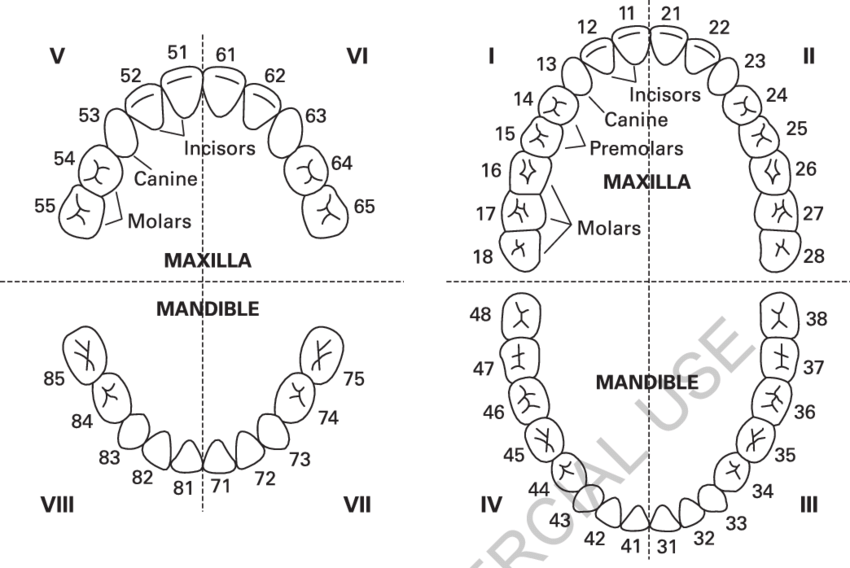
Dentists use FDI Numbering, which goes clockwise from the patient's top right teeth (starting at 5 for children)
Avulsed teeth should be kept in milk or the patient's saliva
Avulsed teeth should only be touched by the crown of the tooth (not the root)
Dirty avulsed teeth can be cleaned by running water, and should never be scrubbed
Never put a baby tooth back in as it can disrupt the eruption of permanent teeth. If you are unsure about whether it's a baby or permanent tooth, get an OPG (it will show you if there’s an adult tooth below the lost tooth waiting to erupt).
If a tooth is missing post-trauma and the parents don’t know where it’s gone, you will need to do a CXR to ensure the child hasn’t aspirated it
Inferior alveolar block technique for anaesthetising lower teeth here. (Handy tip: You can use lignocaine viscous 2% on a Q-tip to numb the area you plan to inject.)
There are two different materials in the dental trauma box: Dycal (calcium hydroxide) and GIC (glass ionomer cement). To use, each of them require mixing for a few minutes until they become a blue-tack-like moldable texture.
Dycal is used to cover exposed pulp (i.e. the painful pink stuff on show when you get a tooth fracture). Use only the tiny amount you need to cover exposed pulp, because otherwise the GIC (which needs to go on after) won’t stick.
GIC goes on after Dycal and can be used like a bridge to "splint" teeth together
Avulsed teeth can be put back into the socket, and "splinted" to the teeth on either side using GIC

Paediatric Surgery talk
Testicular pain => Torsion until proven otherwise. Have a very low threshold for involving Paed Surg, even if it looks like a simple hydrocoele. Ultrasound is shit at detecting blood flow.
Pain due to torsion of the testicular appendage should resolve after 48 hours — otherwise they need to be reviewed
Idiopathic scrotal oedema presents as random erythematous oedema of the scrotum in an otherwise well child. It can be mildly uncomfortable and itchy. Trial antihistamines. It will resolve on its own within a few weeks, but may recur.
Bilious vomiting => Automatic surgical referral
Paediatric Plastics Surgery talk
Intussusception can occur at atypical ages (outside the usual ages of 2mo to 2yrs) due to Meckel’s, polyps, HSP and tumours
Appendicitis in children <5yo has a higher risk of perforation
Think pyloric stenosis if the the postprandial vomiting stops when the child stops feeding
Reduce scarring with the following, starting from a week and applied as often as possible so the wound is always covered for 6 months:
Silicone gel or tape, e.g. Strataderm scar therapy silicone gel
Paw paw ointment, Vaseline or white paraffin ointment
Once healed, apply moisturiser and sunscreen for a year
Lignocaine/Adrenaline can be used anywhere (the traditional "end artery ischaemia" was related to procaine use)
Use a surgical marker to mark the edges of a vermillion border before injecting lignocaine/adrenaline
Fast gut is excellent for facial wounds, where you do not want the sutures staying in >5 days for best cosmetic outcomes
Gaping chin lacs should be sutured (rather than Steristripped and glued) for best cosmetic outcomes
Ring blocks are best done by injecting into the finger webbing, parallel to the finger, as this is less painful (the volar approach is ouch!)
Foreign bodies in the feet that cannot be seen externally should be referred to Plastics for removal in theatre (or may be left in, as scarring of the plantar surface can cause more issues than the foreign body)
Try to wash out wounds to give the patient a jump start reduced risk of infection, even if they're going to theatre for a wash out later