8 April 2020 - Syncope, COVID, Blood Gases
Program
1000 - 1015: Check in, recap from last week - Marrillo
1015 - 1100: COVID SAQs, run through of answers - Brendan
1100 - 1130: Syncope - Marrillo
1130-1145: Break / coffee/ 10 burpees/ Get ready, upcoming session is going to need concentration!
1145 - 1150: ECG of the week - Alex (Have you looked at it and submitted your answers)
1150 - 1250: ABG interpretation with Alex (traditional) and Mark (SID) - have a peek at the gas first
1250 - 1300: Break for fresh air
1300 - 1330: Motor and sensory symptoms - Sarah Bannerman
1340 - 1345: COVERT team update and any departmental issues - Stu
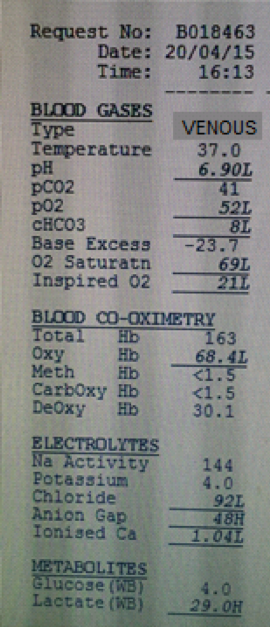
This is the blood gas example used in Alex and Mark’s talk
Key Learning Points from this week’s teaching
The San Fransisco Syncope Rule can help determine who needs a hospital admission in patients that present with syncope. Features include: CHF History, Haematocrit <30%, Abnormal ECG, Dyspnoea, and sBP < 90mmHg at triage. The presence of any one of these features confers a 12% risk of ‘serious outcome’ within seven days.
It has similar sensitivity to senior clinician gestalt but may help the junior practitioner. Studies report sensitivity 85%, specificity 50%.
Don’t forget the ECG in patients with syncope. In all patients we should look for and document the presence or absence of ECG findings of:
AV blocks including trifascicular block
Brugada
WPW
Long/short QT
Hypertrophic cardiomyopathy
Arrhythmogenic right ventricular cardiomyopathy
Blood gases can be complex. Multiple methods can be used to help interpret them. Check out the traditional method of blood gas interpretation on this website with a strong ion difference approaching coming soon.
ECG of the Week
20 year old female presents with palpitations and presyncope. BP 75/50
This ECG shows an example of AF with WPW. It is a spot diagnosis that can’t be missed as incorrect treatment can can lead the patient into VF/VT.
The classic findings of AF with WPW include:
A bizarre, chaotic appearance
Broad QRS complex tachycardia with rates > 200bpm
Irregularly irregular rhythm
Beat to beat variability in the QRS morphology
The safest treatment is almost always going to be DCR.
Drugs that block the AV node can send this patient straight into a VF/VT arrest. So do not give adenosine, B-blockers, calcium channel blockers.
Safe drugs include procainamide, flecainide (if a structurally normal heart) and possibly amiodarone.