
20 January 2021 - Miscellaneous
Program
10.00 - 10.30 - Week in review - interesting cases & debrief
10.30 - 11.15 - Journal club (Hamed, Brid, Joel)
11.15 - 11.45 – ECG (Phil), Blood Gas (Mark), Image (Brendan) of the Week
11.45 - 12.00 - Break
12.00 - 13.00 - Tox Quiz! (Brendan)
13.00 - 14.00 - Dr Genni Newnham, Oncologist - Immunotherapy Side Effects: recognition & management
ECG of the Week
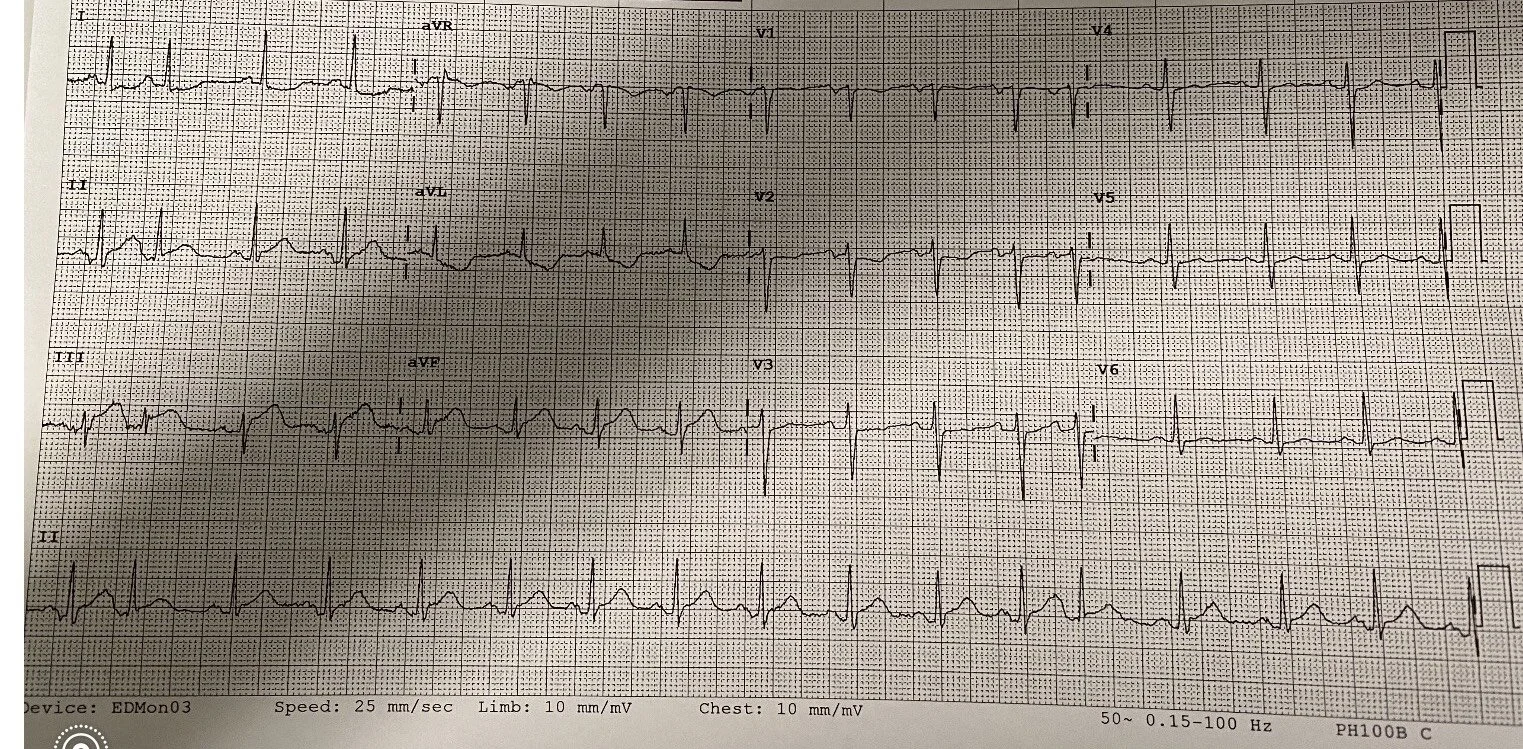
80-year-old lady with left chest pain, lightheadedness
Findings
Sinus rhythm, rate about 100bpm.
ST elevation in II, III, aVF
III>II, Although V1 is normal, it might be worth obtaining a right sided lead.
ST depression in I, aVL, V2 and V3
T-wave inversion in aVL (remember this is often the earliest sign of an inferior infarction).
Image of the Week
60-year-old with cramping abdominal pain
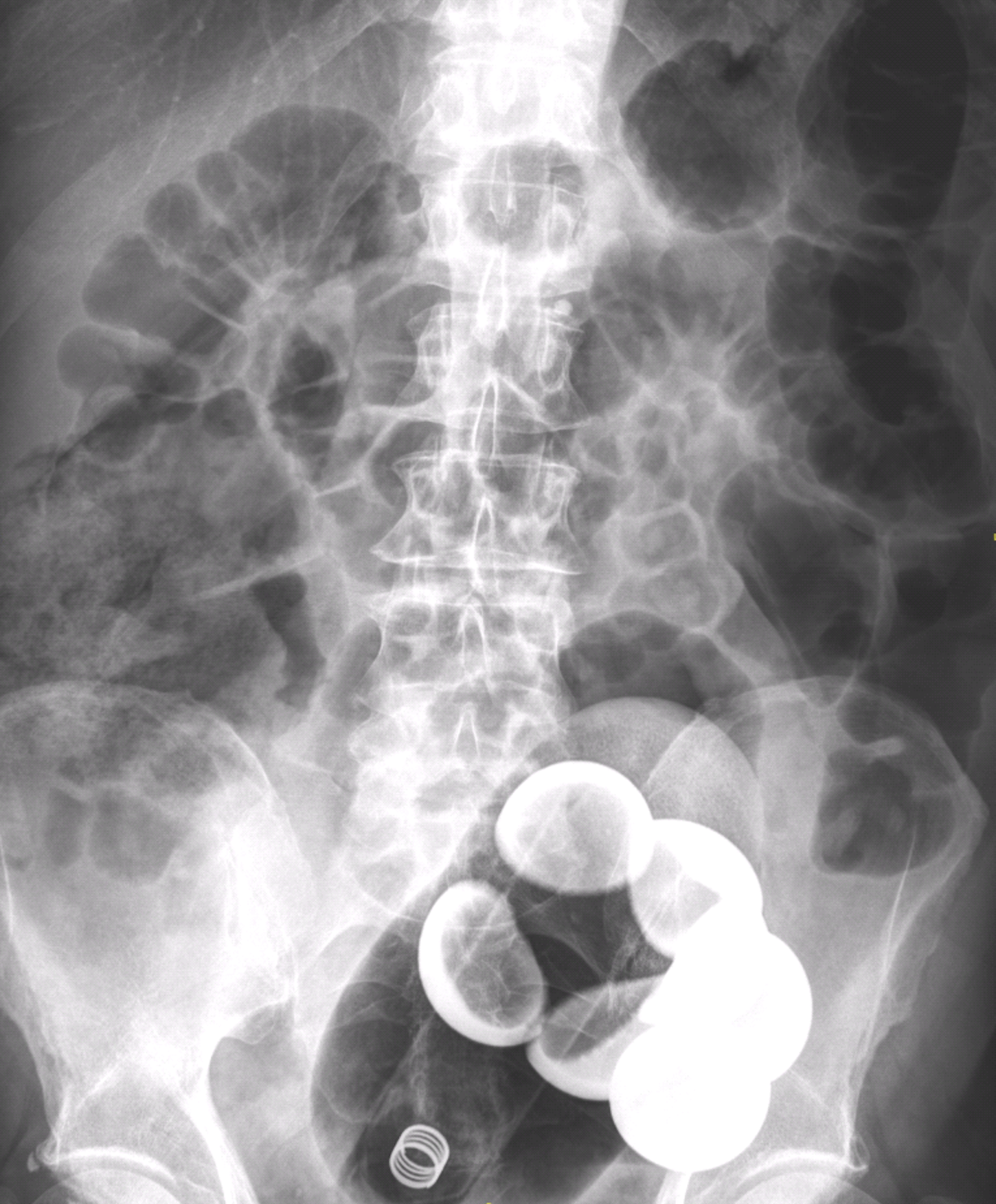
This is a supine abdominal xray.
There are clear rectal foreign bodies visible. The bowel gas pattern appears fairly normal. Possible complications include perforation, sepsis, bowel obstruction and localised trauma. This case should be referred to the surgical unit for removal of the foreign bodies.
Gas of the Week
Clinical information
BP 108/80, Temp 38.3, Sats 100% RA, RR 20
Social: From home alone, Not currently working, Previously worked as a driver, Smoker - Previously heavy but currently smoking 1-2 cigarettes per day
HxPC: Presenting with multiple symptoms.
Reports that he has lost a significant amount of weight since having his vascular surgery at RMH
Reports 9kg in last months
Attributes this to the fact that his dental plate which he has had in for 1-2 years has now become
loose fitting and doesn’t function any more - This is preventing him from eating any substantial
foods and he has subsequently been having a soft diet of soup and bananas.
Also reports for the past week that he has had intermittent vomiting and diarrhea when he tries to
eat.
Last had diarrhea yesterday.
Denies fevers / night sweats however has a temp of 38.3 in ED.
Denies SOB
Denies abdominal pain
Denies sick contacts / COVID contacts.
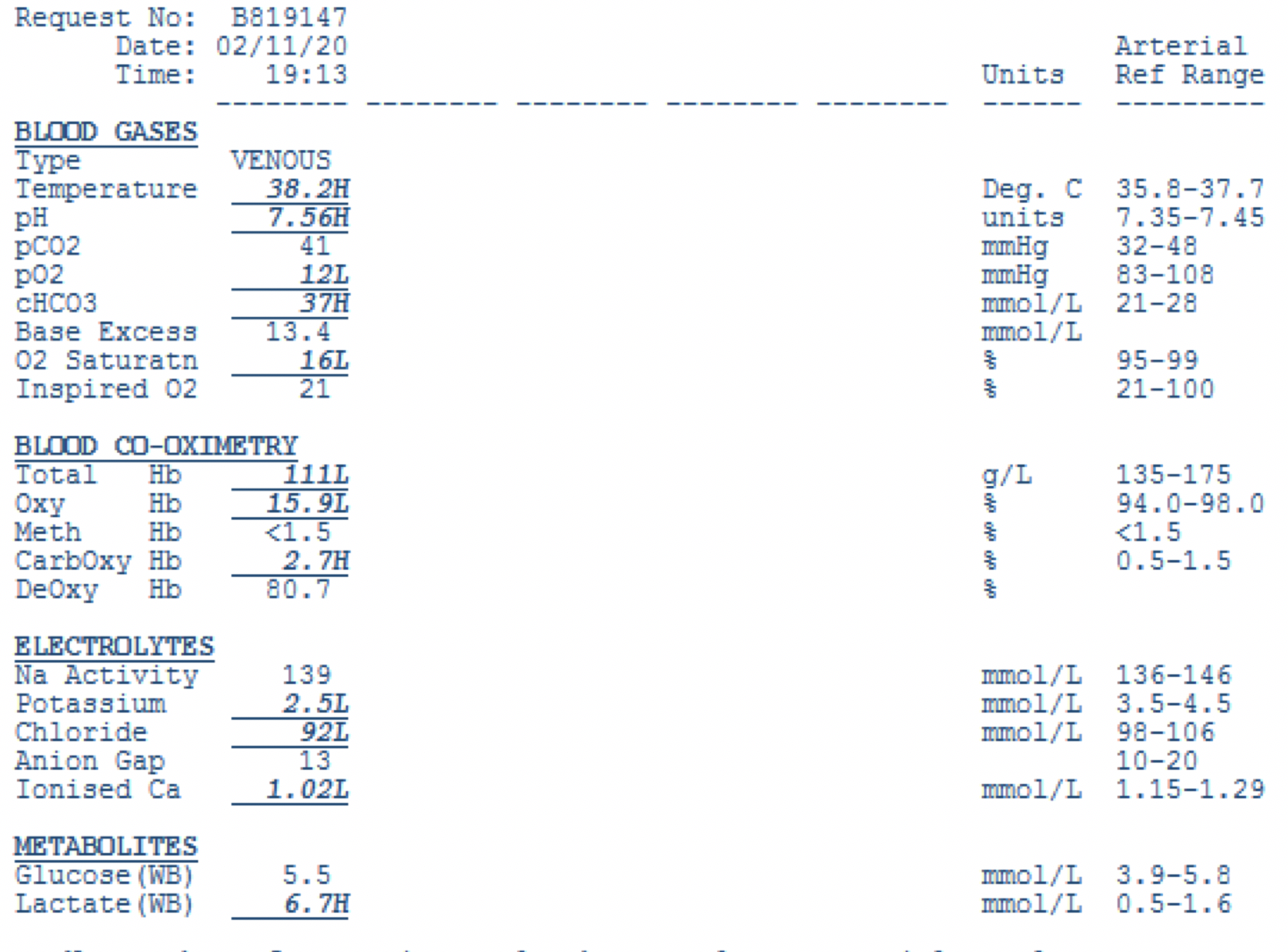
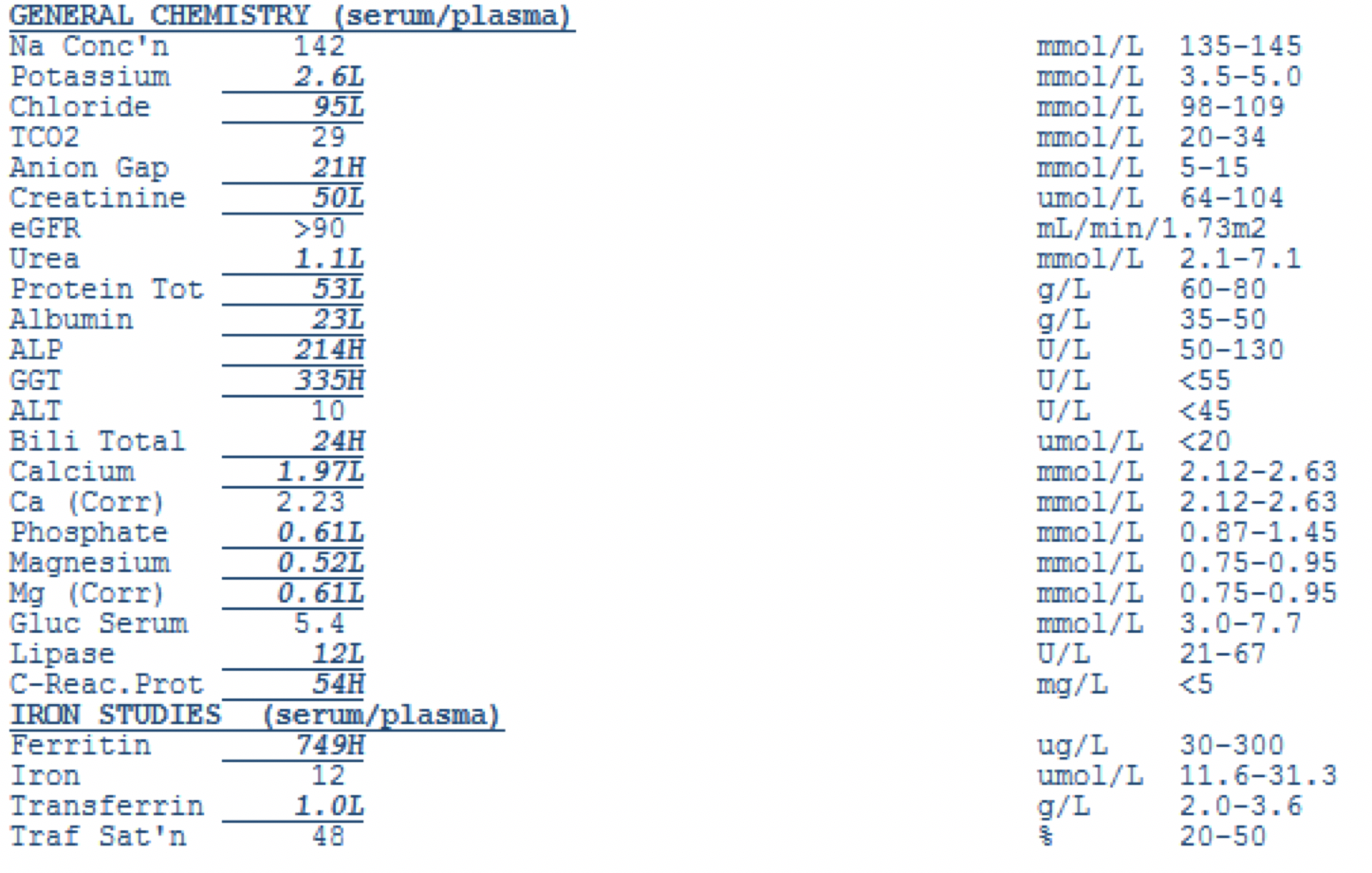
The pH is high with a positive base excess suggesting a primary metabolic alkalosis. It is a venous gas so we cannot accurately comment on respiratory compensation.
Fencl-Stewart
SID = 139 + 2.5 - 92 = 49.5. Therefore there is a hypochloraemic alkalosis with the effect on the base excess of +7.5
Lactate effect - 6
Albumin effect +5
Sum effect = +6.5. The actual BE is +13 so there is an extra alkalotic process occurring. I.e. a chloride unresponsive alkalosis.
Cause of the hypochloraemia could include vomiting or loop diuretics. Causes of the hypoalbuminaemia could be from malnourishment or catabolism.
Cause of the high lactate is likely hypoperfusion due to intravascular volume depletion.
Cause of the chloride unresponsive metabolic alkalosis could include: high mineralocorticoids (Conn’s), increased renin i.e. decreased renal perfusion due to dehydration
Other significant findings include severe hypokalaemia, hypomagnesaemia and hypophosphataemia. These need replacement and he is at high risk of worsening disturbance due to refeeding syndrome.