13 January 2021 - Mixed Bag
Program
1000-1030: Welcome and Interesting cases
1030-1100 Trauma audit review Tess Watson
1100-1130 Procedural sedation policy Brendan
1130-1140: break
1140-1200 ECG and image of the week –Mim, and echo Mark
1200-1300 Palliative care
1300-1310 Break
1310-1320 Gas of the week – Mark
1320-1350: Registrar presentation – topic to be advised Chris Slinger
ECG of the Week
59 year old female
s/p- recent chest infect, on oral antibiotics-nil effect. increasingly sob at triage, increased wob. cp today. rr38 temp 37.3 bp92/68 spo2 91% hr 39
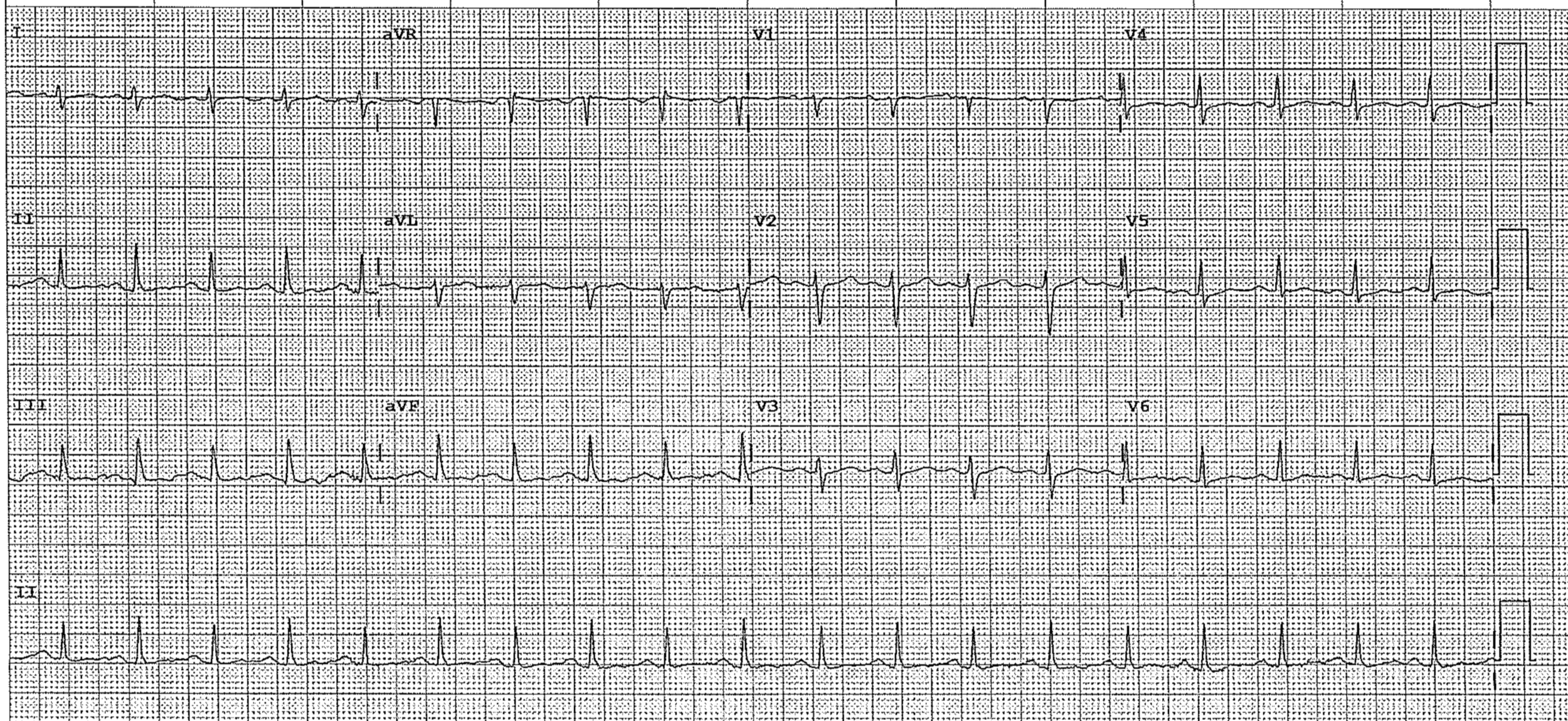
Findings of this ECG
Rate- 114 bpm
Rhythm- sinus
Axis- slight right axis deviation
QRS complexes- electrical alternans. Differential diagnoses for this finding include, - pericardial effusion ( + sinus tachycardia), VT, WPW, alternans bundle branch block or fascicle block, cardiac rupture, massive PE, digoxin toxicity, chronic alcoholism
Low voltage - differential diagnosis for this finding include, pericardial effusion, constrictive pericarditis, myocarditis, pleural effusion, obesity, COPD endocrine: hypothyroidism, adrenal insufficiency, infiltrative disease- sarcoidosis, tumour and end stage cardiomyopathy
In this case, the cause was a large pericardial effusion.
Image of the Week
The X-ray is from the same patient as the above ECG.
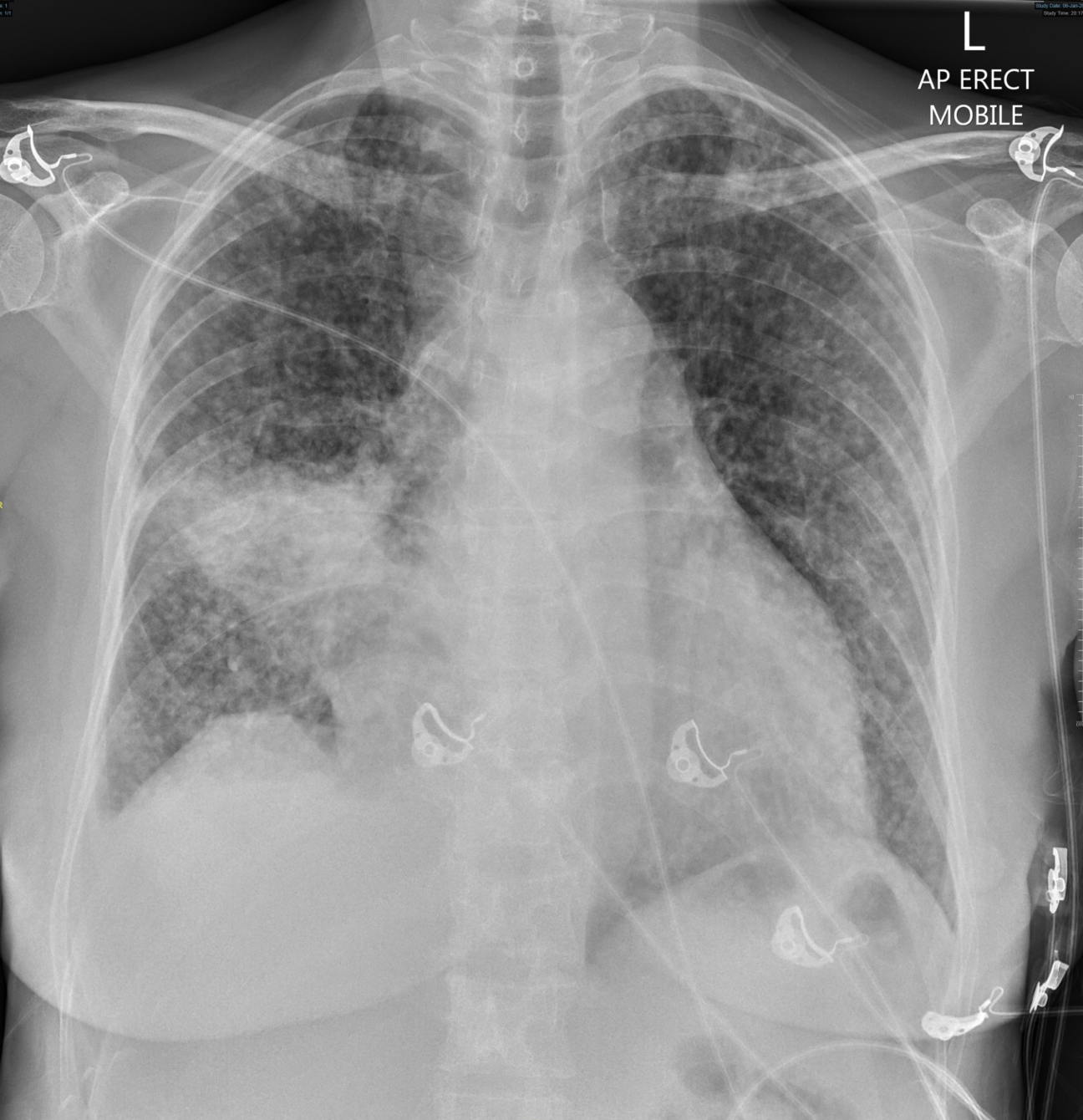
Findings of this CXR include
Right middle lobe consolidation vs right middle lobe mass
Cardiomegaly
Right pleural effusion
Miliary opacities in bilateral lung fields
Causes include: TB, viral and bacterial infections, immune causes, post-infections, neoplastic amongst others.
Gas of the Week
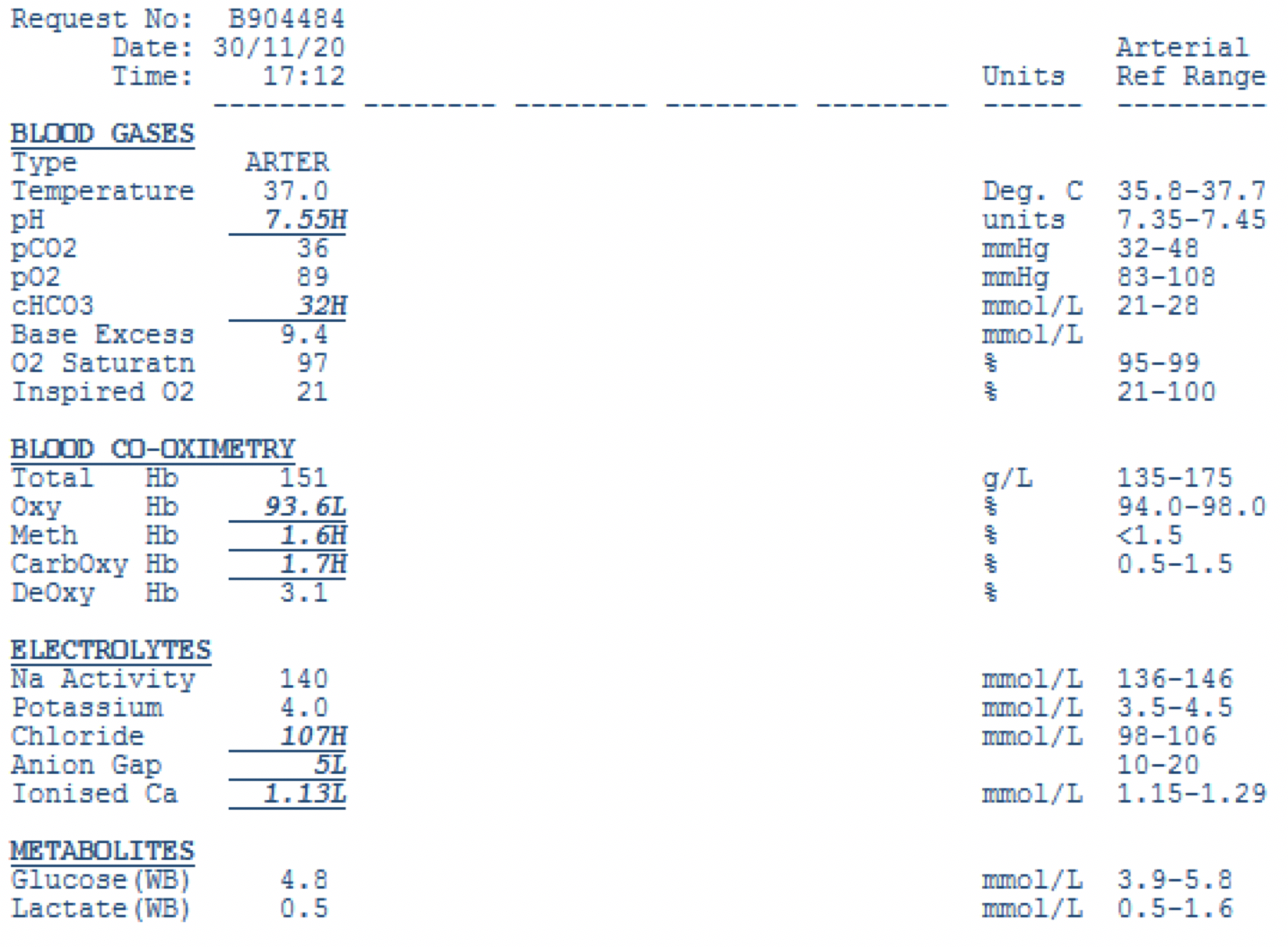
35 yo fit landscape gardener presents feeling unable to get deep enough breath for a few days – feeling comes and goes. No fever, cough.
Patient notes history of 'aches' in lower limbs over a number of years, longstanding and has been investigated with no cause found - sees GP, physiotherapist and exercise/sports physiologist.
Albumin 40
Findings
There is a moderate alkalaemia.
Expected pCO2 = 0.7 x bicarb +20 = 42. The actual pCO2 is 36 so therefore there is also a respiratory alkalosis present.
The Aa gradient is normal so the patient’s hyperventilation is not due to lung pathology.
Fencl-Stewart Approach
SID = 140+4-107 = 37. Therefore there is a hyperchloraemic met acidosis contributing -5 to the base excess
Lactate effect = 0
Albumin effect = 0
With the measured base excess of 9 there is an unexplained +14 metabolic alkalosis
This is considered a chloride unresponsive metabolic alkalosis. Causes of this include:
Increased renin/aldosterone
Bartter, Gitelman syndrome
Severe hypokalaemia