
16 December 2020 - Miscellaneous
Program
10.00 – 10.15 – Teaching Recap: Registrar Teaching 2/12/2020 (Phil Ward), Austin PEM Teaching 9/12/2020
10.15 – 11.00 – Radiology Teaching: MRIs (Edward Yeoh, radiology registrar)
11.00 – 12.30 – Migrant communities and communicating across cultures: Monita Mascitti-Meuter, Cultural Diversity Program Co-ordinator, SVHM
12.30 – 13.00 – ECG, Blood Gas & Image of the Week - Brendan, Matt, Mark
13.00 – 13.30 – Registrar Presentation: Peripheral Vascular Disease – Divya Nagarajan
13.30 – 14.00 – Interesting Case Presentation - Khalid Bahar
1315 - Sim Session - Stu will email
Key Learning Points
Click to enlarge
Long QT
Normal QT intervals vary, but anything above 500ms should raise concern
Long QT can lead to Torsades de pointes - that’s why we care!
Causes include electrolyte disturbances (low Ca, K, Mg) , hypothermia, drugs (lots), genetic causes and myocardial disease such as ischaemia
To remember medications that can cause a long QT think of the “anti-” medications. I.e. antipsychotics, antidepressants, antimicrobials, antiarrhythmics
In the ED, remember to seek and treat electrolyte disturbances
Treatment changes depending on the cause. If due to toxicology, treatment usually aims to speed up the heart (isoprenaline, pacing etc). If due to a genetic cause then it is often slowing the heart, i.e. beta-blockers.
ECG of the Week
71-year-old lady came in with cardiogenic-sounding syncope - 3 episodes in 2 days.
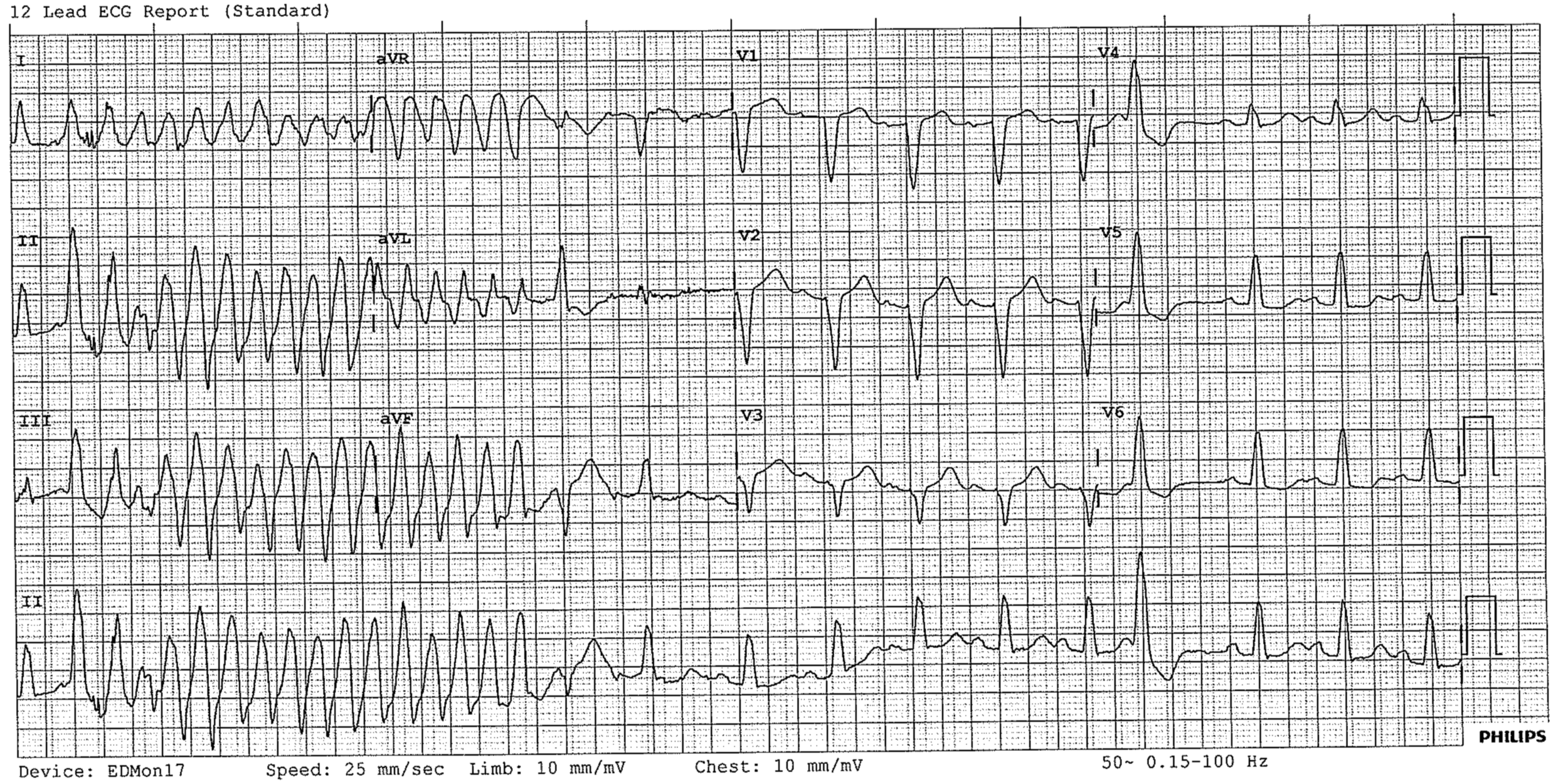
There is a non-sustained broad complex polymorphic VT at the beginning of this ECG. The first beat in the rhythm strip is normal, followed by an ectopic beat and an R on T phenomenon causing the VT.
There is a borderline QT prolongation so you could argue this is Torsades de pointes.
When considering VT look for the following:
The morphology. Is it monomorphic, polymorphic, Torsades, bidirectional, others
Is it sustained (>30s) or non-sustained (3 or more complexes but <30s)?
Clinical presentation. Is the patient haemodynamically stable or unstable? I would argue that any VT is potentially unstable as it could rapidly deteriorate even if the patient is currently conscious and has a normal BP.
Image of the Week
79-year-old man brought by ambulance following fall from standing. No significant injuries found on primary or secondary surveys. Kept in ESS overnight for further multidisciplinary review the next morning. Complains of increasing lower back pain overnight. CT T/L spine ordered overnight to further investigate.
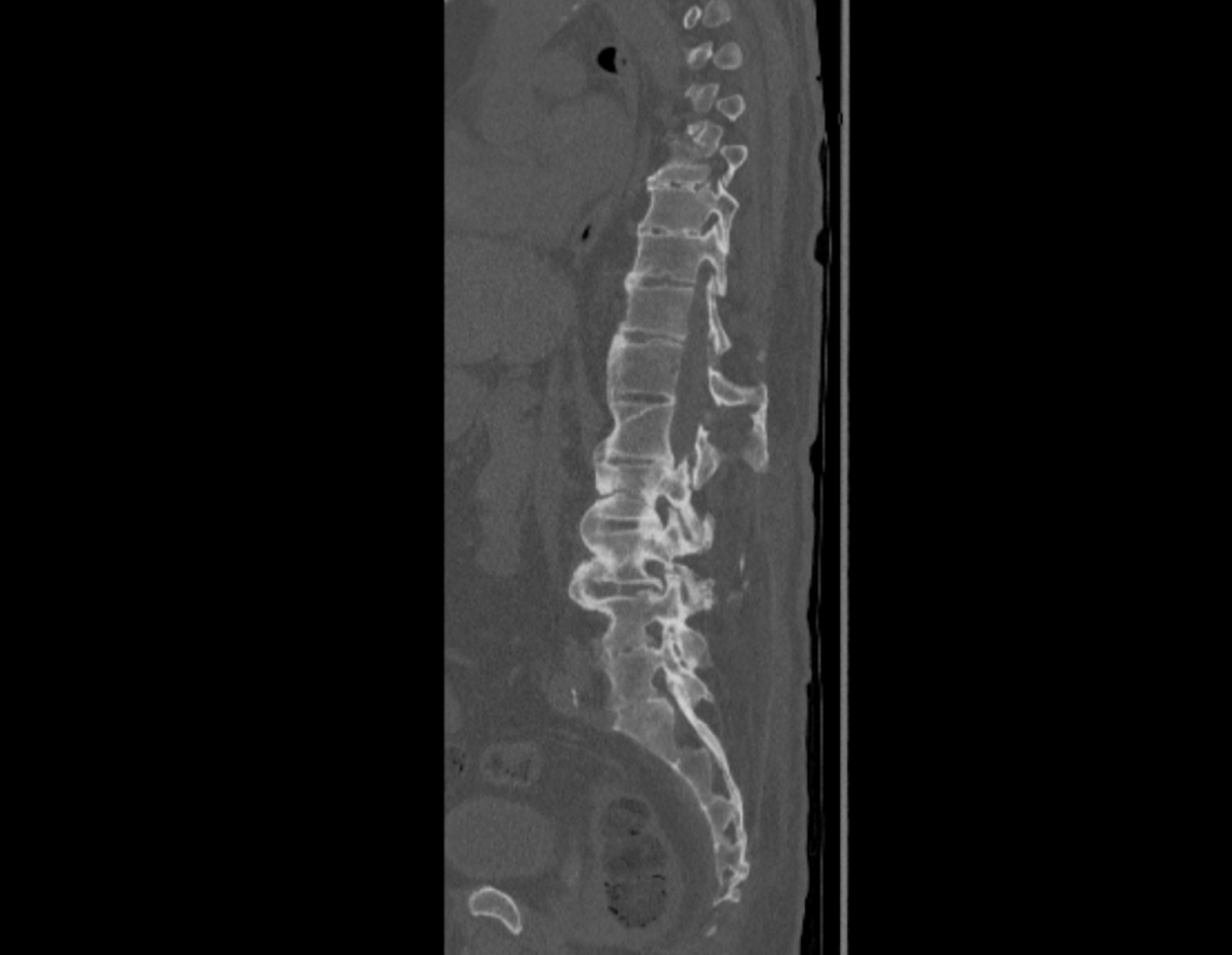
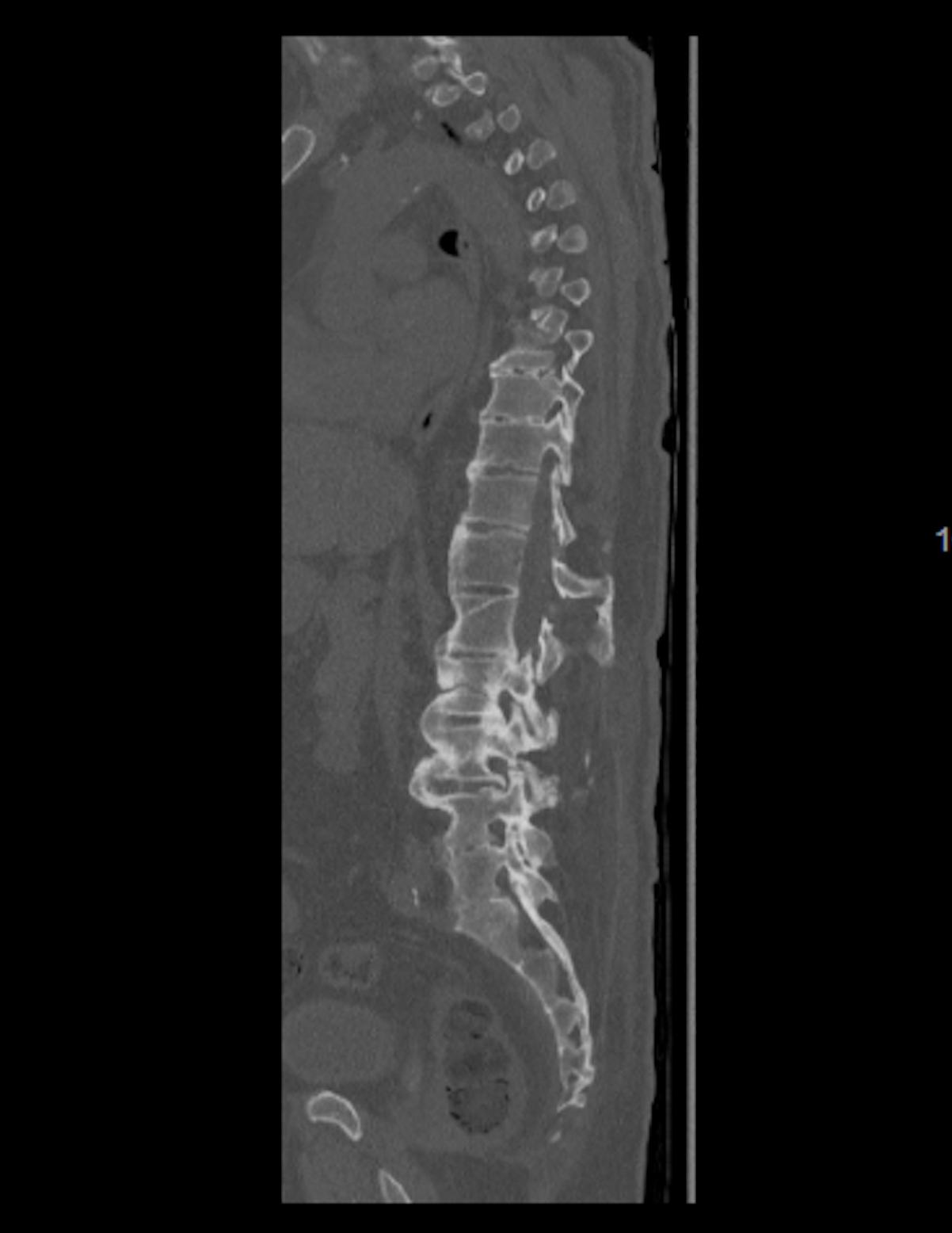
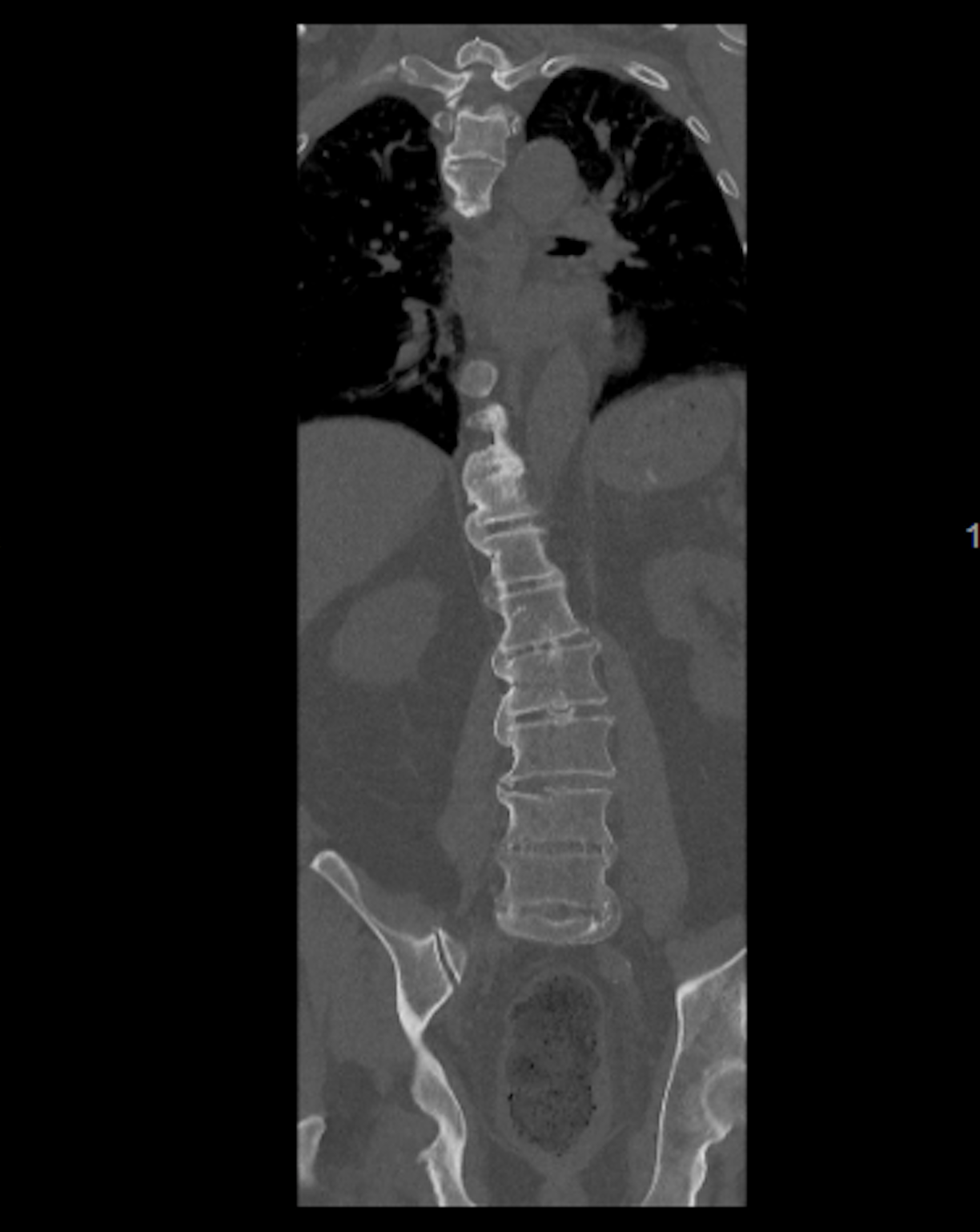
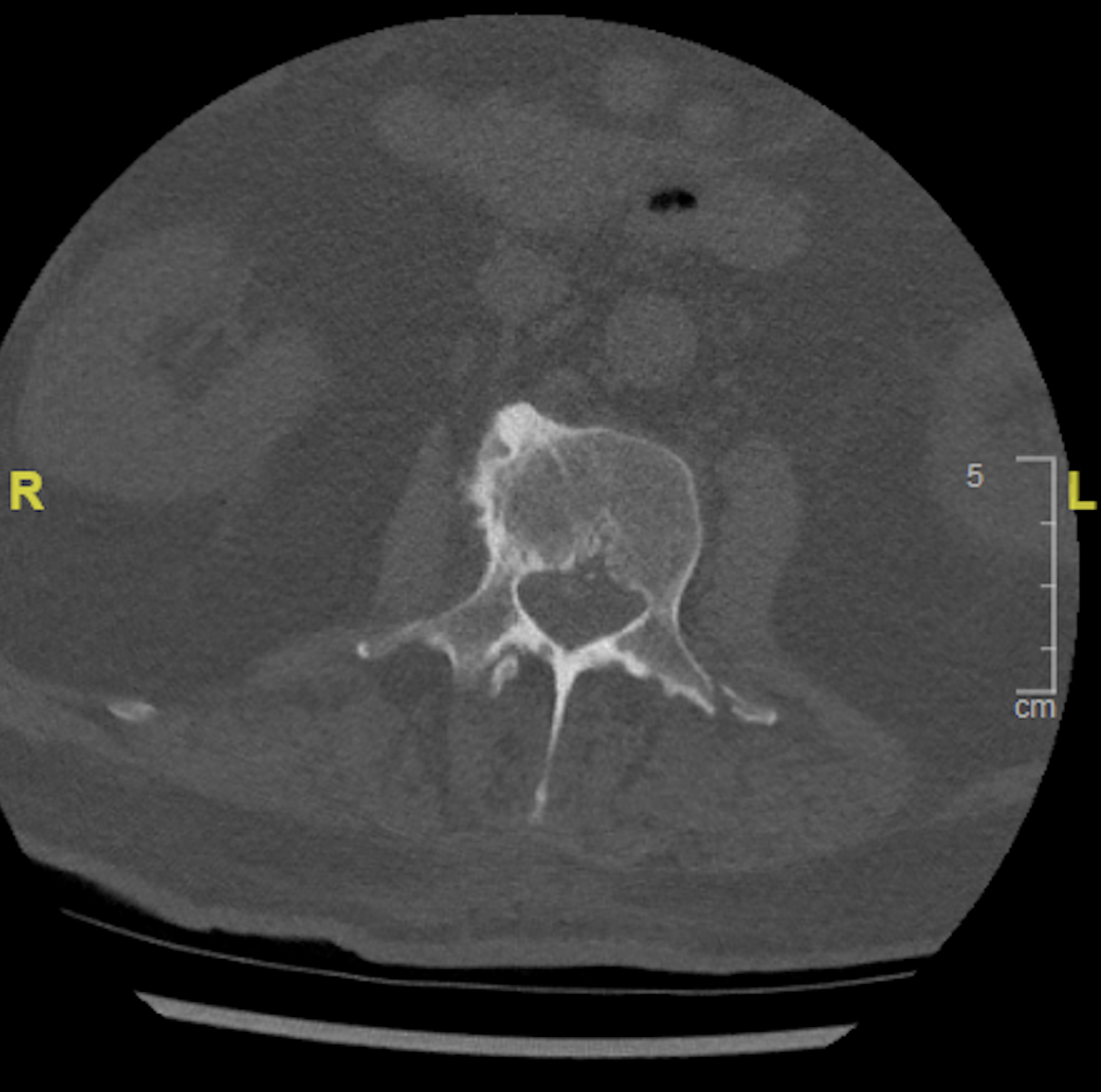
There is an acute fracture of the L2 vertebral body. It involves both the anterior and posterior cortex of the vertebral body, which would be consistent with a two column fracture.
Read more about the three column concept here. https://radiopaedia.org/articles/three-column-concept-of-spinal-fractures?lang=gb
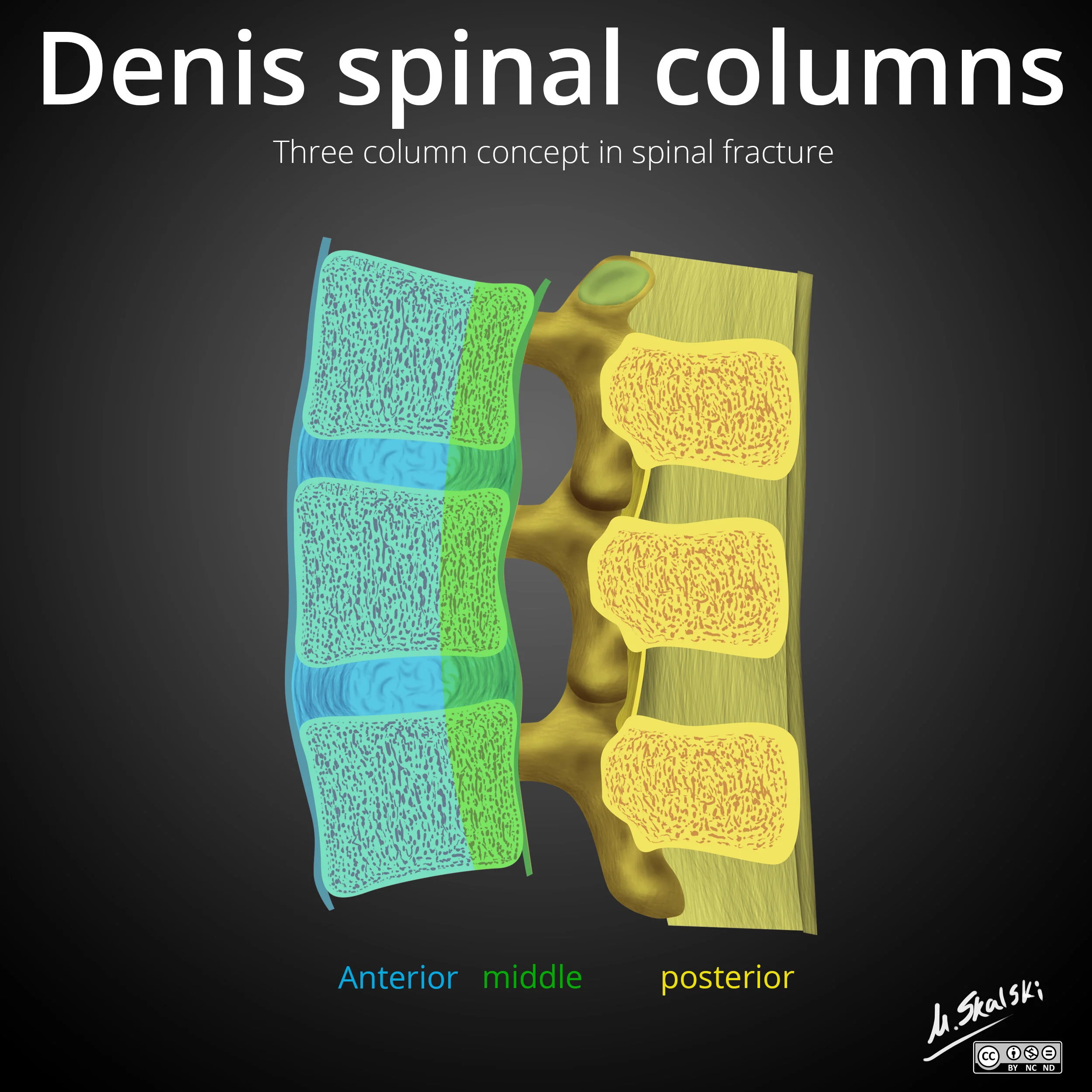
Case courtesy of Dr Matt Skalski, Radiopaedia.org, rID: 32621
Gas of the Week
74 yo female. Presented with diarrhoea and PR bleeding for 4 days. Thought to be colitis on a background of recent prolonged general medicine admission for a similar presentation. Newly diagnosed Hep C cirrhosis.
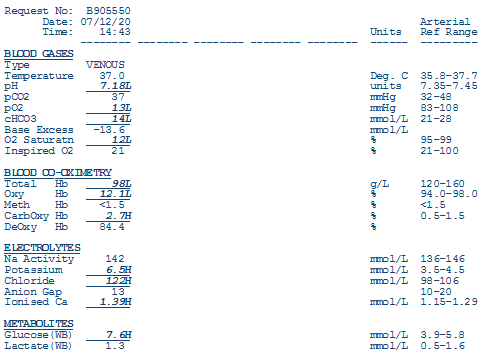
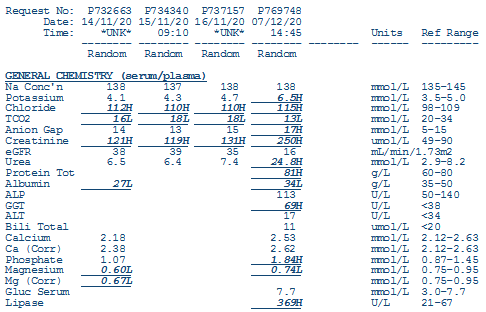
There is a metabolic acidosis with a low pH and negative BE
Fencl-Stewart Method
SID = 142 +6.5 - 122 = 27
There is therefore a moderate to severe hyperchloraemic metabolic acidosis contributing -15 to the base excess
Lactate effect = 0
Albumin effect = +2
The sum base excess is -13 which matches the measured base excess.
Traditional method
AG = 142-122-14 = 6
Therefore there is a NAGMA
Another thing to note on these investigations include hyperkalaemia as expected with the acidaemia. (Corrected to 5.5) The biochemistry reveals an acute kidney injury and mild raised lipase.
Causes of the metabolic acidosis in this patient will likely be diarrhoea and possibly renal tubular acidosis