
9 June 2021 - Environmental
Teaching this week will be over Zoom:
https://zoom.us/j/5981463478?pwd=RThaZzNkL2w5bldBMlNHeE1zZFFaZz09
Meeting ID: 598 146 3478
Passcode: 2021
Program
1000-1010: Recap
1010-1020: ECG of the Week — Jannet Chan
1020-1030: Image of the Week — Katherine Watson
1030-1130: Working with Interpreters — Karella de Jongh (SVHM Interpreter Services)
1130-1230: Hyperbaric Medicine — Dr Arun Ilancheran (FACEM & FCICM)
1230-1300: Lunch
1300-1330: Heat-related Illness — Ezra Limm
1330-1400: Cold Thermal Injuries — Sarah Simons
NOTE: 1330-1400: Fellowship Exam Groups — Written with Alex Handrinos & OSCE with Brendan Morrissey
Join Zoom Meeting: https://us02web.zoom.us/j/89545481615
Meeting ID: 895 4548 1615
Image of the Week
33F tripped and fell while intoxicated. She is unable to weight bear with severe left ankle pain.
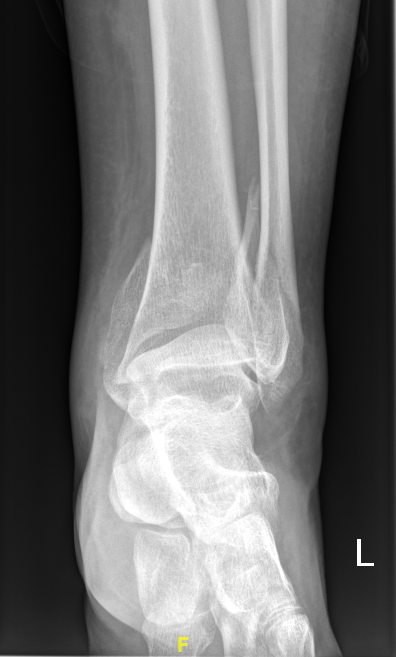
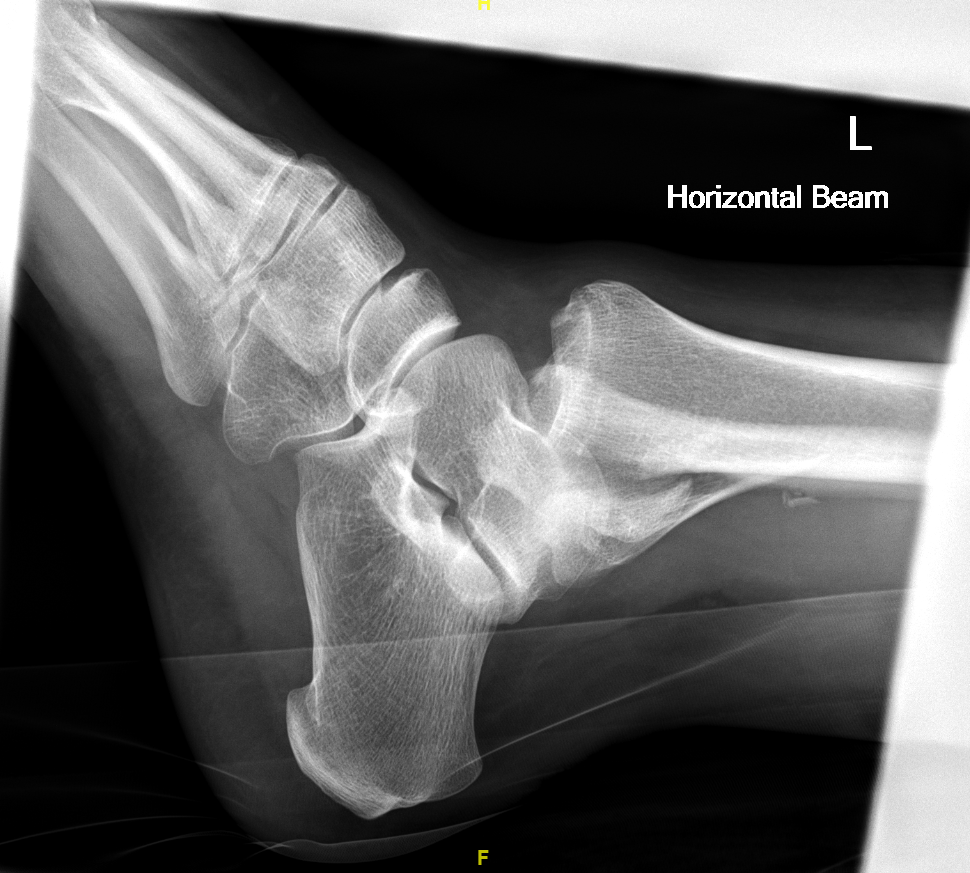
ECG of the Week
82F presents with syncope.
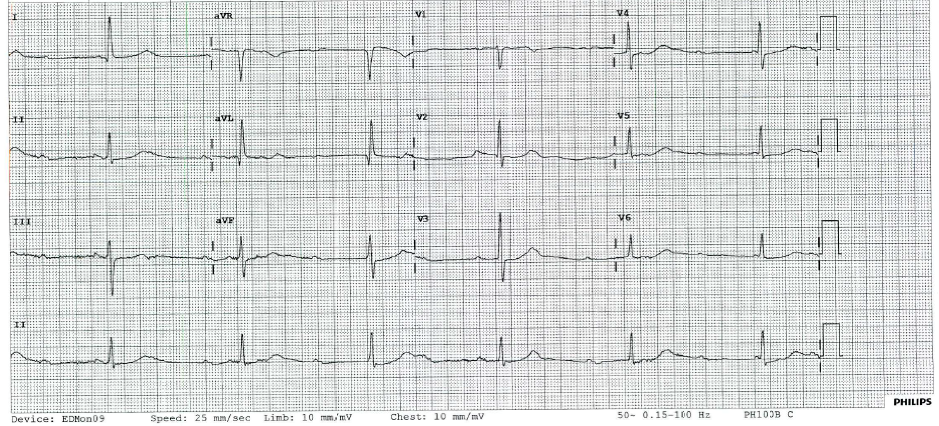
1) Describe the ECG and diagnosis
Atrial rate of 85bpm
Ventricular rate of 38 bpm
Complete AV dissociation with junctional bradycardia
Normal axis
Diagnosis: Complete heart block with junctional bradycardia
Approach to bradycardic ECG:
Atrial rate?
Ventricular rate?
p wave — conducting or non-conducting?
2 consecutive non-conducting p waves = High-grade AV block
PR interval — constant or variable?
Mobitz type 1 — Variable PR interval before and after the missed beat
Mobitz type 2 — Same PR interval before and after the missed beat
Consider AV block with 2:1 / 3:1 / 4:1 block with atrial and ventricular rate ratio
QRS — narrow or wide
2) What may cause complete heart block?
AV nodal blocking drugs, e.g. calcium channel blocker, beta blocker, digoxin
AMI — especially inferior myocardial infarction
Degenerative disease of the conduction system
Metabolic, e.g. hyperkalaemia
3) The patient becomes hypotensive BP 70/50. Describe your stepwise management priorities.
Atropine 600mcg IV, repeat every 5 mins, max of 3mg- likely unsuccessful
IV saline bolus 500mL stat
IV adrenaline infusion — starting at 5mcg/min and increasing every 2 minutes until systolic BP >90mmHg
Transcutaneous pacing
Informed consent
Haemodynamically stable analgesia/sedation, e.g. ketamine 0.5mg/kg
Apply pads in the antero-posterior position
Set to demand mode, at rate of 70, output 70mA
Ensure both electrical and mechanical achieved
Identify and treat reversible causes
Transvenous pacing in cath lab +/- PPM insertion