
8 September 2021 - Disaster Medicine
Teaching this week will be on Microsoft Teams:
Program
1000—1015: Recap — Alex Burman
1015—1025: Image of the Week — Phil Ward
1025—1030: ECG of the Week — Rachel Goh
1030—1130: Disaster Medicine — Andrew Walby
1130—1145: Break
1145—1215: Retrieval Medicine — Emily Hunter
1215—1230: Lunch
1230—1315: Disaster Scenario — Phil Ward
1315—onwards: Break-Out Groups as below
1315—1400: Leadership Workshop — Jacqueline Maplesden & Sarah Ward
1315—1445: Simulation with Stuart Dilley (Main Simulation Room in Education Centre) — Camilo Vesga, Stuart Howard, Sarah Simons
1345—1445: Ultrasound with Mark Rugless — Luke Bayley
1315—1430 Fellowship Written Group with Alex Handrinos (Zoom Meeting link) — Rachel Goh, Andrew West, Roshetha Bansal, Matthew Kilmurray
Disaster / Major Incident Scenario
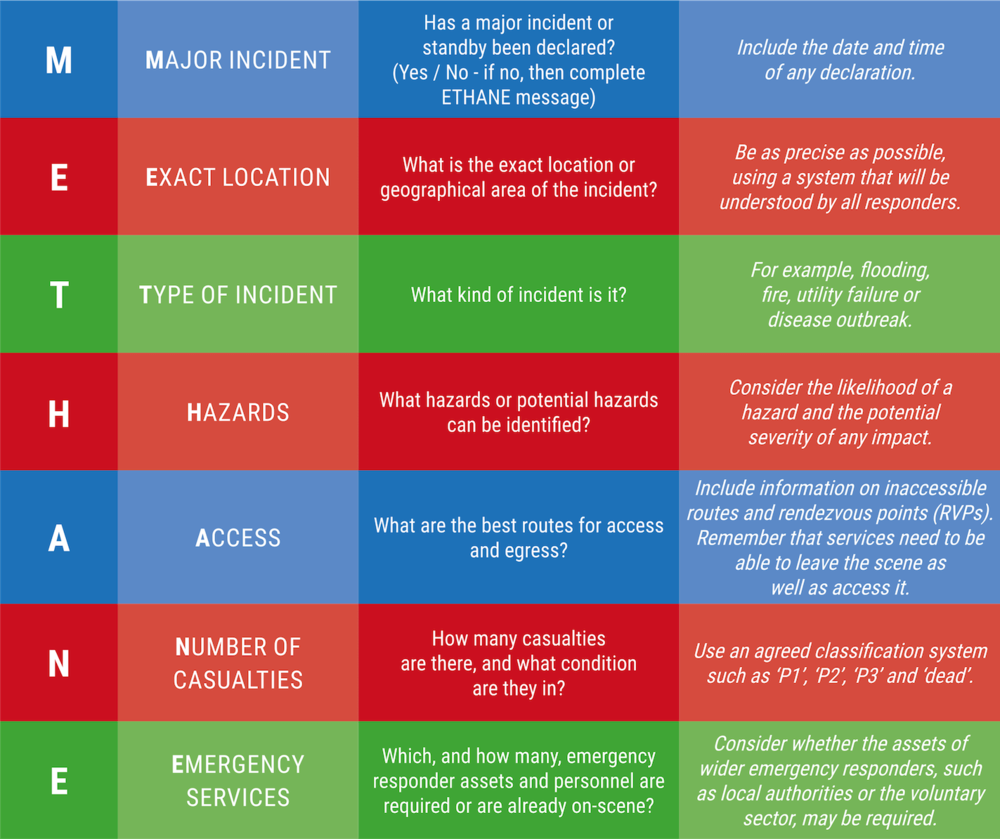
Obtain relevant details using METHANE acronym:
Prepare your department:
1. Declare major incident
2. Activate trauma team and major disaster plan
3. TEAM-POST
TEAM—POST acronym:
T — Team
Allocate roles and teams
Call in extra staff
Notify ICU, Anaest, Surg, Radiol, Blood Bank, Social Work
Notify Director of ED, CEO, Security, Media
Inpatient teams to help with decanting and care of non-trauma patients
E — Equipment
Triage tags for rapid triaging
Ventilators
Pelvic binders and splints
Disaster packs
A — Area
Involve bed manager
Decant current ED patients to other appropriate areas
Redefine areas in ED, e.g. outpatient department becomes fast track
One-way discharge, e.g. if patient goes for CT, they should not come back to ED but go to the next appropriate area
M — Medications
Analgesia
Sedation
Fluids
Blood products
Antibiotics / ADT
POST-disaster care
P — Prepare documentation, e.g. criminal case, forensic investigation
O — Ongoing staffing and restocking
S — Standing down — when?
T — Team debrief — hot and cold, future training
Image of the Week
77M re-presents for the 3rd time in 7 days with epigastric pain and vomiting. BAT call for hypotension with systolic BP 70 on arrival. Blood tests reveal an AKI with Cr 485.
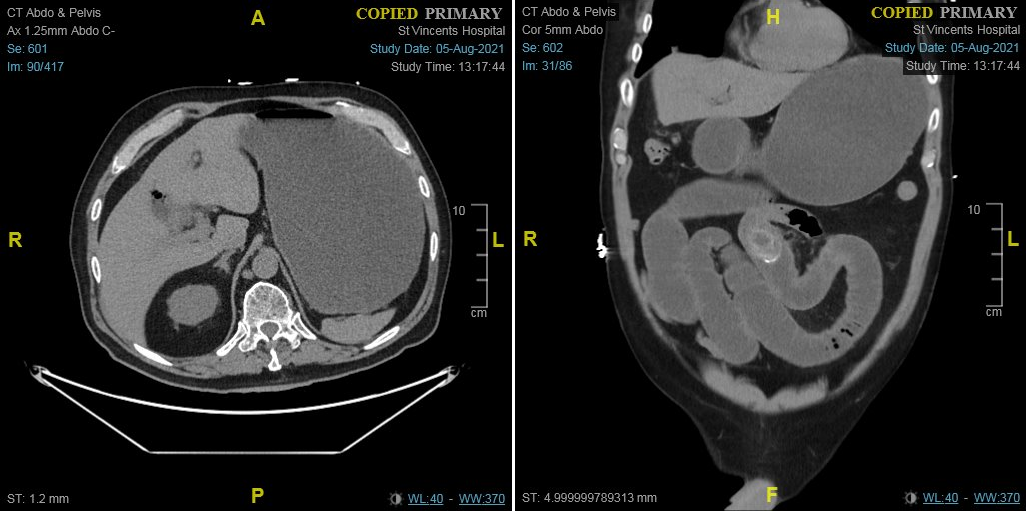
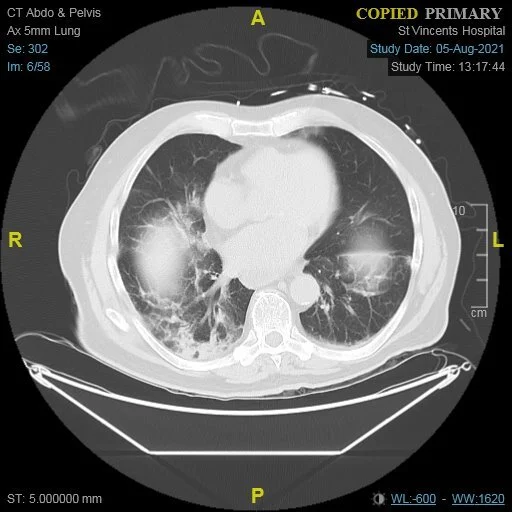
1) Describe the CT.
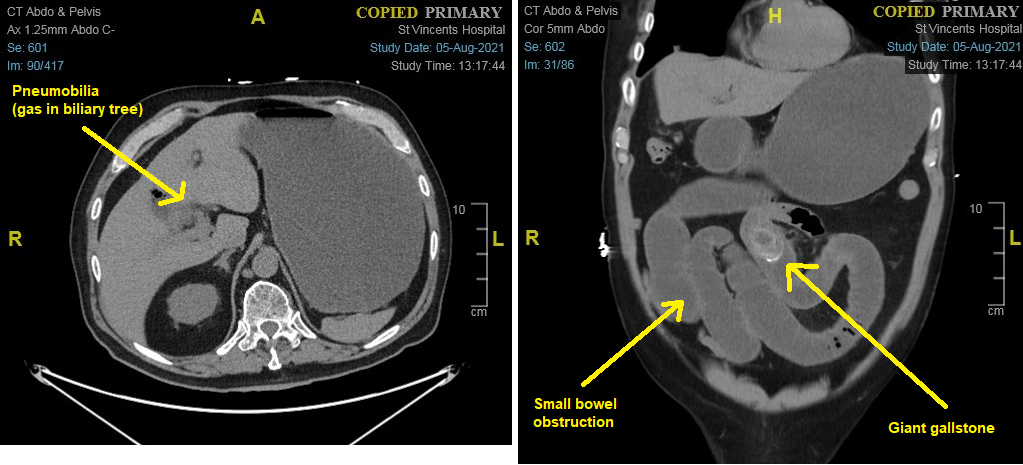
Giant gallstone
Pneumobilia (gas in the biliary tree)
Small bowel obstruction
Dilated stomach
Aspiration pneumonia
2) Name the classic triad for this diagnosis.
Rigler triad seen in gallstone ileus
Ectopic calcified gallstone
Pneumobilia
Small bowel obstruction
ECG of the Week
42yo man presents with chest pain. The ECG interpretation states “Benign Early Repolarisation” and the nurse asks you how you can tell if it’s an anterior STEMI or BER.
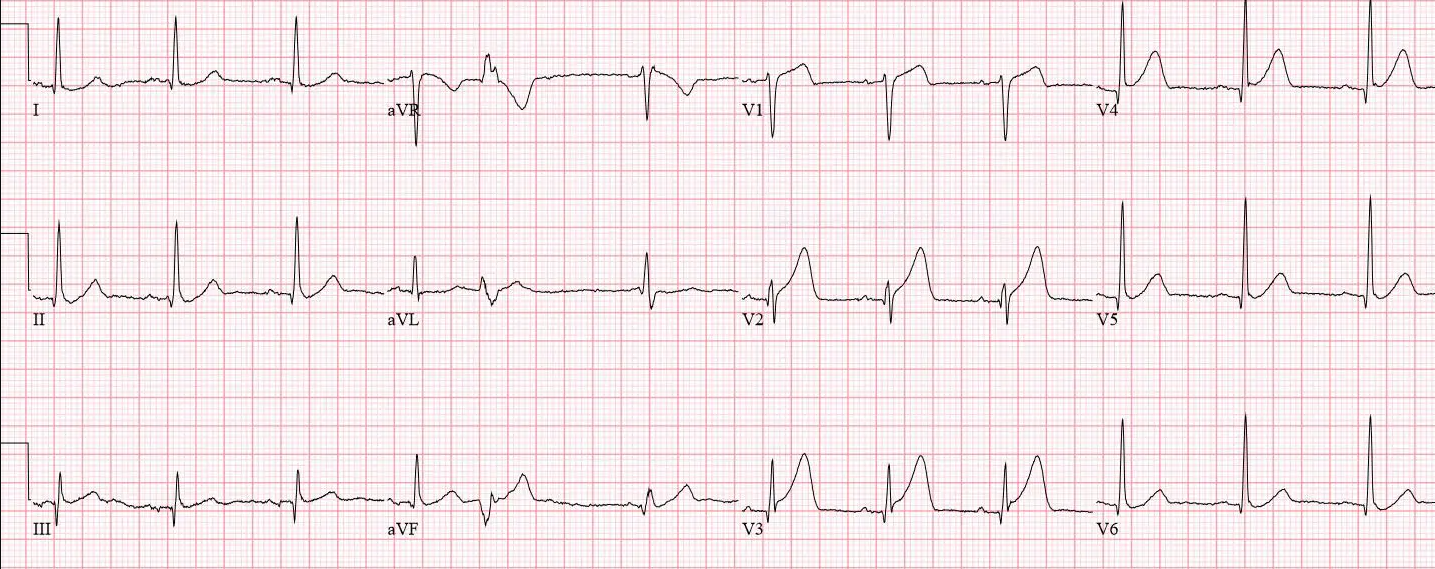
1) What is the criteria for a STEMI?
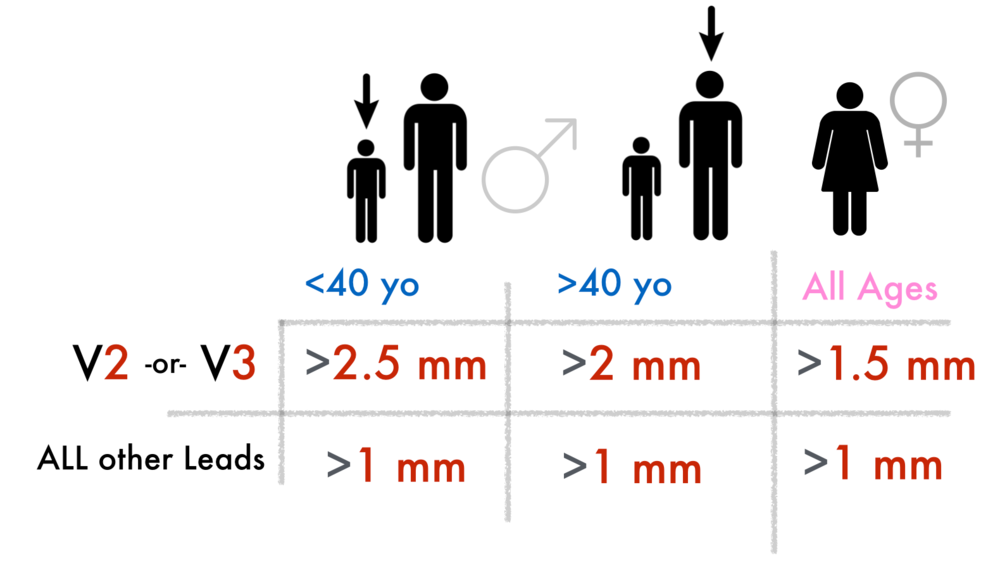
And also…
20 min of clinical symptoms consistent with ACS
New LBBB
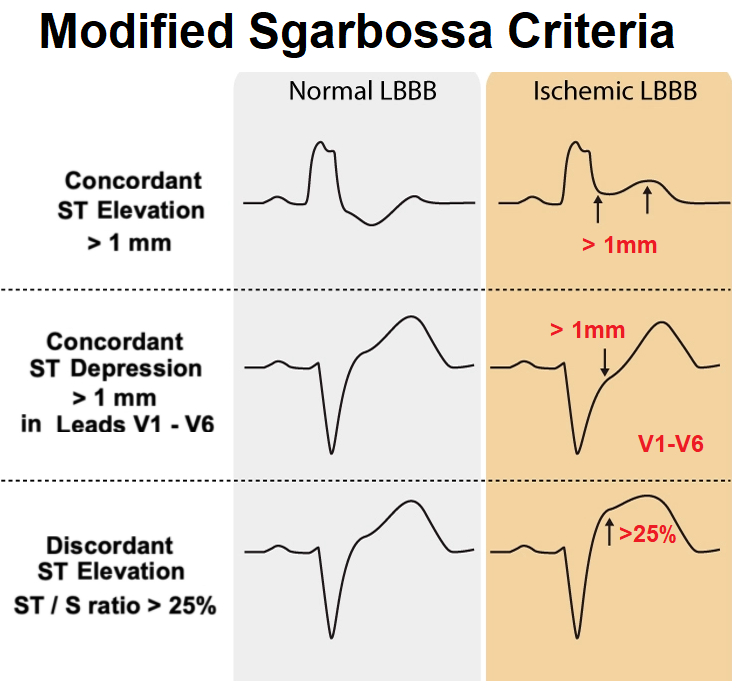
For patients with pre-existing LBBB or pacemaker
STEMI equivalents:
Wellen’s syndrome (proximal LAD occlusion)
de Winter T waves (proximal LAD occlusion)
Hyperacute T waves in ≥ 2 contiguous leads (left circumflex occlusion)
aVR or V1 ST elevation and/or widespread ST depression (proximal LAD occlusion, LMCA syndrome, triple vessel disease)
aVL and V2 ST elevation (diagonal branch of LAD occlusion)
TWI in aVL (LAD, left circumflex or RCA occlusion)
Posterior STEMI (left circumflex or RCA occlusion)
STE ≥ 0.5 mm (≥ 1 mm in men < 40 years) in V7, V8, or V9
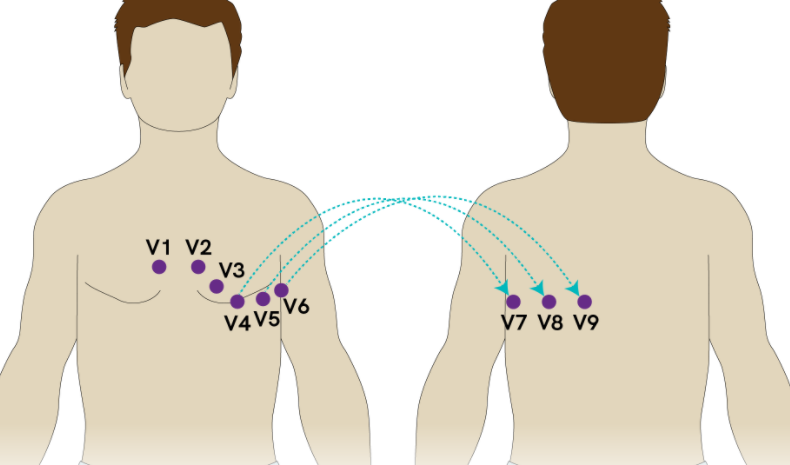
More resources on STEMI equivalents: RebelEM, EMResident
2) What is the criteria for benign early repolarisation?
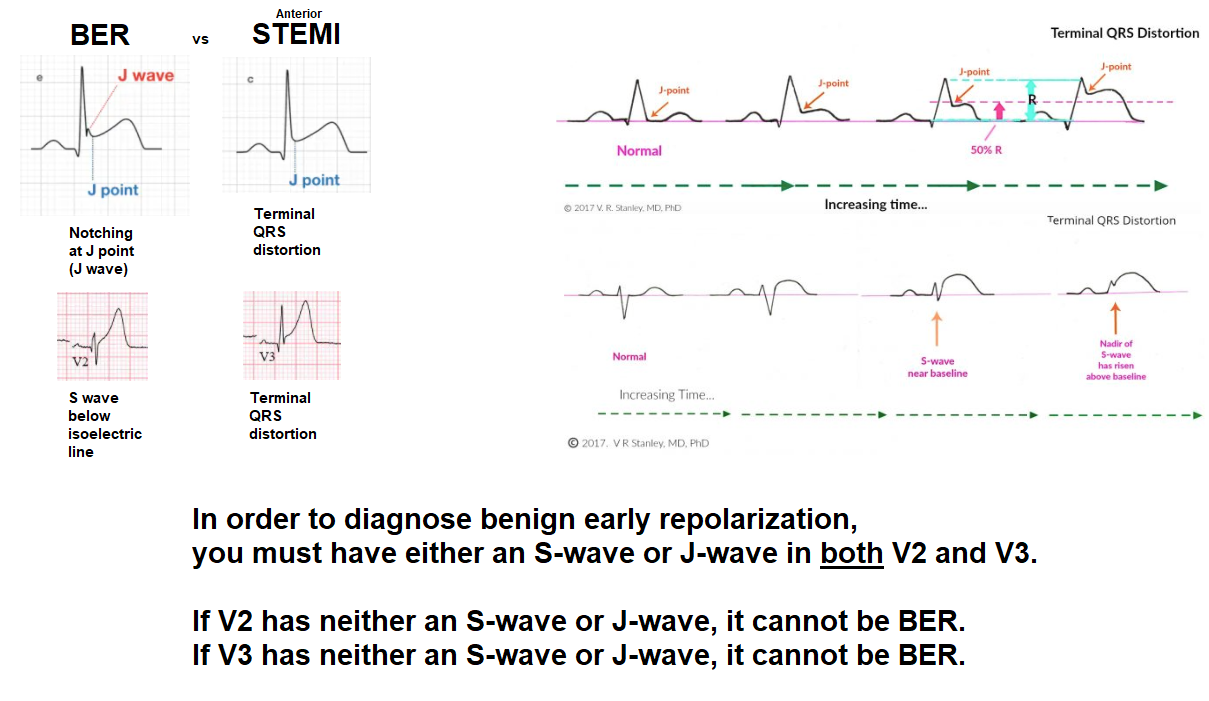
For more info about BER vs anterior STEMI: Emergency Medicine Cases
3) What is the diagnosis?
STEMI = Terminal QRS distortion in V3 (S wave does not go below isoelectric line)