
23 June 2021 - Toxicology II
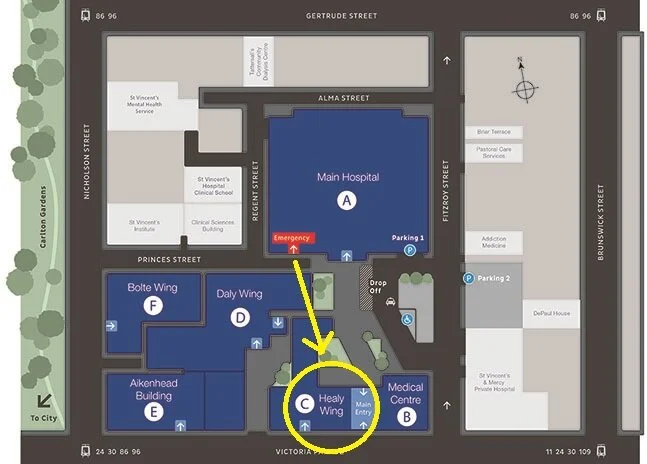
Teaching this week will begin in the Conference Room in the Education Centre on Level 3 of Building C (Healy Wing).
Program
1000-1015: Recap — Rachel Goh
1015-1045: Radiology Tute — Leon Winata
1045-1050: ECG of the Week — Ben Sinnett
1050-1100: Break
1100-1300: Small group rotations x3 (40min each)
Group 1: Marty, Laura, Jonathan I, Sarah
Group 2: Andrew W, Katherine, Stu, Jason
Group 3: Ezra, Jannet, Mim, Jess
1100-1140: Rotation 1
Group 1 — Tox Sim (Debrief Room)
Group 2 — Tox ECGs (Conference Room)
Group 3 — Tox Cases (Teaching Lab)
1140-1220: Rotation 2
Group 1 — Tox Cases (Teaching Lab)
Group 2 — Tox Sim (Debrief Room)
Group 3 — Tox ECGs (Conference Room)
1220-1300: Rotation 3
Group 1 — Tox ECGs (Conference Room)
Group 2 — Tox Cases (Teaching Lab)
Group 3 — Tox Sim (Debrief Room)
1300-1330: Lunch
1330-1400: Toxic Gardens — Ben Sinnett
1400-1430: Illicit Drugs — Jacqueline Maplesden
1430-1500: Registrar Forum
NB: 1330-1430: Fellowship Exam Break-out Groups — Written with Alex Handrinos & OSCE with Brendan Morrissey
ECG of the Week
A 60 year old male with a history of high cholesterol and a family history of sudden cardiac death presents to ED at 6am. He was woken from sleep with severe, central chest pain. BP 100/60.
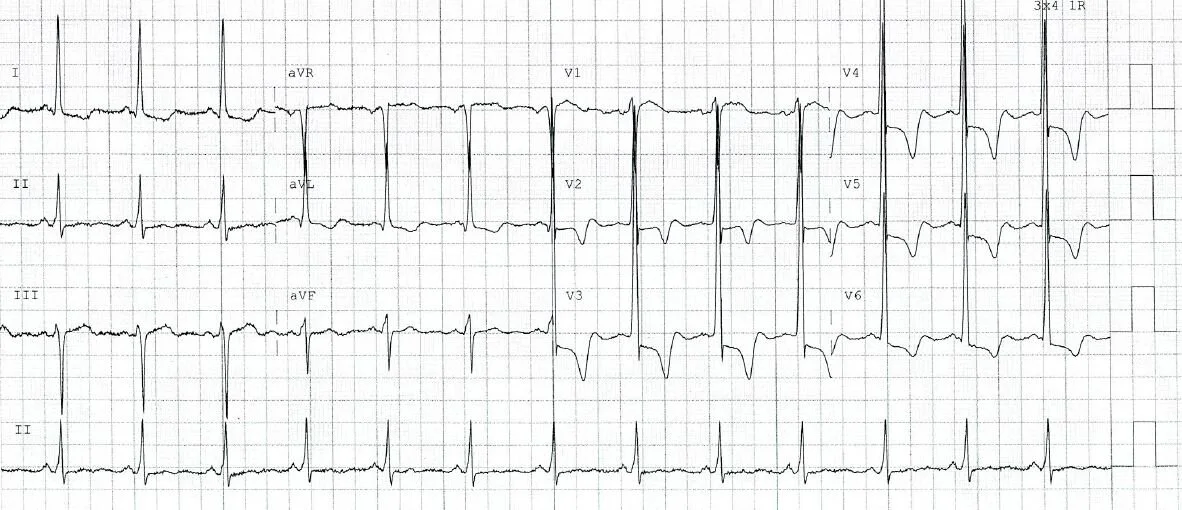
1) Describe the ECG.
Sinus tachycardia
HCM = Giant (> 10 mm) TWI in the precordial leads
LVH = Left axis deviation and tall QRS complexes in the precordial leads
LV strain = ST depression and TWI in left-sided limb leads (I, aVL, V5-6)
NOTE: ED Consultant Dr Stuart Dilley pointed out that there are also signs of WPW (short PR and delta wave). Turns out that 33% of HCM patients have signs of WPW!
2) Provide one primary diagnosis and two differentials.
HCM
Wellen’s, PE and SAH are other differentials (although SAH doesn’t fit with the clinical stem).
3) Would you activate the cath lab?
Cardiology took the patient for a coronary angiogram despite a TTE showing new HOCM. His coronaries were clean.
4) The patient becomes hypotensive. Discuss your approach to resuscitation, given this diagnosis.
Patients with HOCM are reliant on preload and afterload to overcome dynamic outflow obstruction. Therefore:
Ensure adequate fluid resus
Use a beta blocker to improve time for diastole (e.g. propranolol)
Use a pure alpha agonist to improve systemic afterload (e.g. phenyleprine)
Avoid beta agonists because they increase heart rate and contractility, worsening dynamic outflow obstruction. Adrenaline and noradrenaline may worsen low output in HOCM patients.
Avoid GTN because it reduces afterload
Consider ECMO early