18 March 2020
Live remote teaching. 0930 - 1300
0930 - Welcome and WebEx setup
1000 - 1100 Stroke - Lauren Sanders
11-00 - 1200 M&M - Kirsten Cassidy
1200 - 1300 Departmental/COVID update - Andrew/Jonty
Stroke - Lauren Sanders
Lauren presented a summary of stroke care at St Vincents and answered questions posed to her on all things stroke care. Here are the highlights.
Process of calling a code stroke
Call the code at the time of ambulance notification. This gives the stroke team valuable time to assemble and gather information about the patient by calling GP/pharmacist/relatives
It is far better to over-call than under-call the stroke code. Can be called 24 hours. Call the stroke consultant if the registrar is not available for any reason
The aim is to skip resus and go straight to the CT scanner if the patient is stable. Remember there may be times where an airway needs to be secured prior to CT transfer
Code stroke protocol should be called up to 24 hours post time last seen well. This allows greater capture of patients that may be eligible for clot retrieval
Clot retrieval may be performed at St Vincents or the patient transferred directly to The Austin interventional radiology. There are processes in place from the stroke team to make this process happen. Lauren suggests keeping the paramedics in the CT tech room while decisions are being made as they could possibly transfer the patient
What does the stroke registrar need to know urgently at the initial contact?
Time last seen well
Any contraindications for thrombolysis
A rough idea of the patient’s neurological deficit
Other key points
Current guidelines do not recommend thrombolysis for ‘non-disabling’ stroke. Lauren reminds us that what might be non-disabling for most could be disabling for others such as the neurosurgeon with hand weakness.
In lacunar infarcts and posterior circulation stroke, a clear history is vital to making what is often a difficult diagnosis
All patients with suspected posterior circulation stroke should be admitted for stroke workup and MRI. A negative CT in a patient with ongoing symptoms is not good enough.
This session did not discuss some of the controversies regarding the evidence behind thrombolysis. There is heaps of discussion out there about this. At a minimum, have a look at the ACEM statement here.

Lauren Sanders Stroke Talk
M&M - Kirsten Cassidy
Here are some of the key educational points from the M&M. Cases will not be reviewed here due to confidentiality.
We probably should consider activating a trauma call more than our current practice
Think about what imaging you would like in the trauma patient, and then be the patient advocate when discussing with radiology. Most of us have more trauma experience than the radiology registrars and surgical registrars
We should consider what is our role as ED Registrar/ED Team Leader in managing a trauma case - perhaps this is an area for further education
Elderly patients that can’t walk probably should at a minimum have a pelvic X-ray. Presentations of proximal femur/pelvis fractures are not always as obvious as a ‘shortened, rotated limb’
If we order a test it is our responsibility to either review the results ourselves, or clearly hand-over that results need reviewing
Wow, spinal infections can be tough to pick! Low threshold to consider the diagnosis in an intravenous drug user with back pain (even without fever)
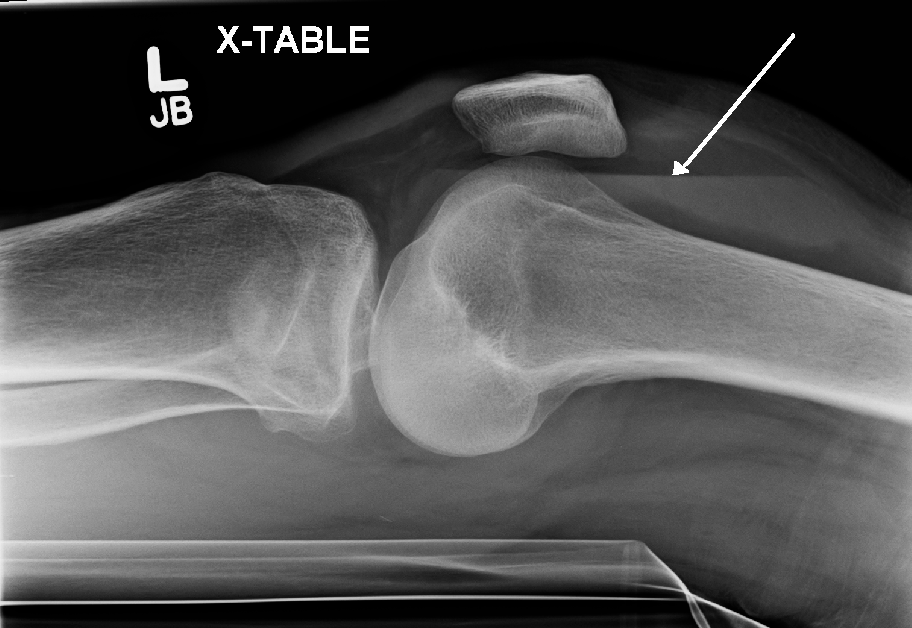
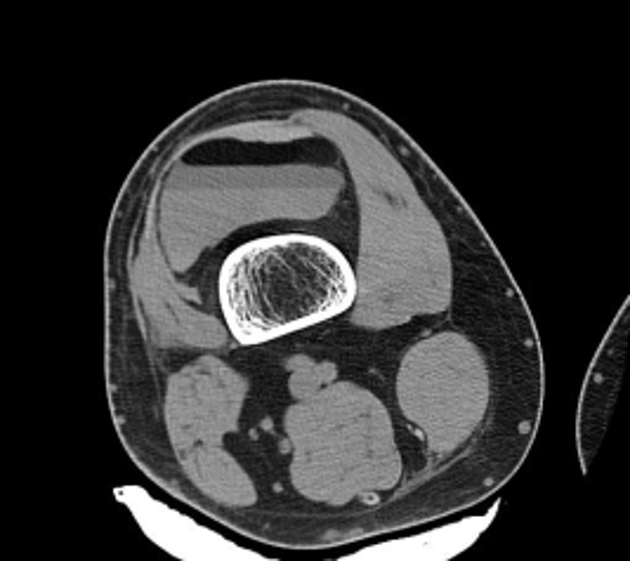
Lipohaemarthrosis should be looked for on all lateral knee xrays as it can be easily missed. Radiopaedia has a nice article on why it occurs. See example images below. The guys from radiopaedia also once taught me that any straight line seen on imaging indicates pathology. The fat/blood level in lipohaemarthrosis is a great example of this. So my advice, look for the straight line. https://radiopaedia.org/articles/lipohaemarthrosis
Lacerations to the hand and wrist are at high risk of injuring tendons. Our primary exam anatomy knowledge is crucial and our examination skills of individual tendons is just as important. Examination is nicely summarised here. https://www.nuemblog.com/blog/2018/4/9/hand-exam
Teaching Recap 11th March
We covered three main topics in the morning sessions and simulation. Key learning points as below.
Asthma
Should we prescribe inhaled steroids? Yes. First line therapy is a single agent inhaled corticosteroid. This is significantly cheaper for the patient (and government) than combination therapy. Look at eTG for drug and dosing suggestions.
What does the life threatening asthmatic look like? –They are hypoxic, bradycardic, have poor air movement with a possible silent chest, decreased conscious state and acidosis. We are unlikely to miss these patients but recognising and declaring to our team how unwell the patient is important to escalate management.
Simulation: We ran a scenarios around the management of the critical asthmatic when usual therapies are not working. The key is a RSI with appropriate ventilation strategy while continuing other therapies. One key message is to think about preparing for intubation before the decision that intubation is required.
PE
We have a StV clinical pathway for suspected PE. Use it.
How do we tailor our approach for the pregnant patient? We need to consider how can we come to an acceptable diagnosis with the least investigation required
Shared decision making is important here and knowledge of radiation risks are important.
Doppler and D-Dimer have zero radiation – Can we stop our investigation here?
Have a look at the following WA based pathway widely recirculated for this scenario
http://www.imagingpathways.health.wa.gov.au/index.php/imaging-pathways/respiratory/pulmonary-embolism-in-pregnancy#pathway
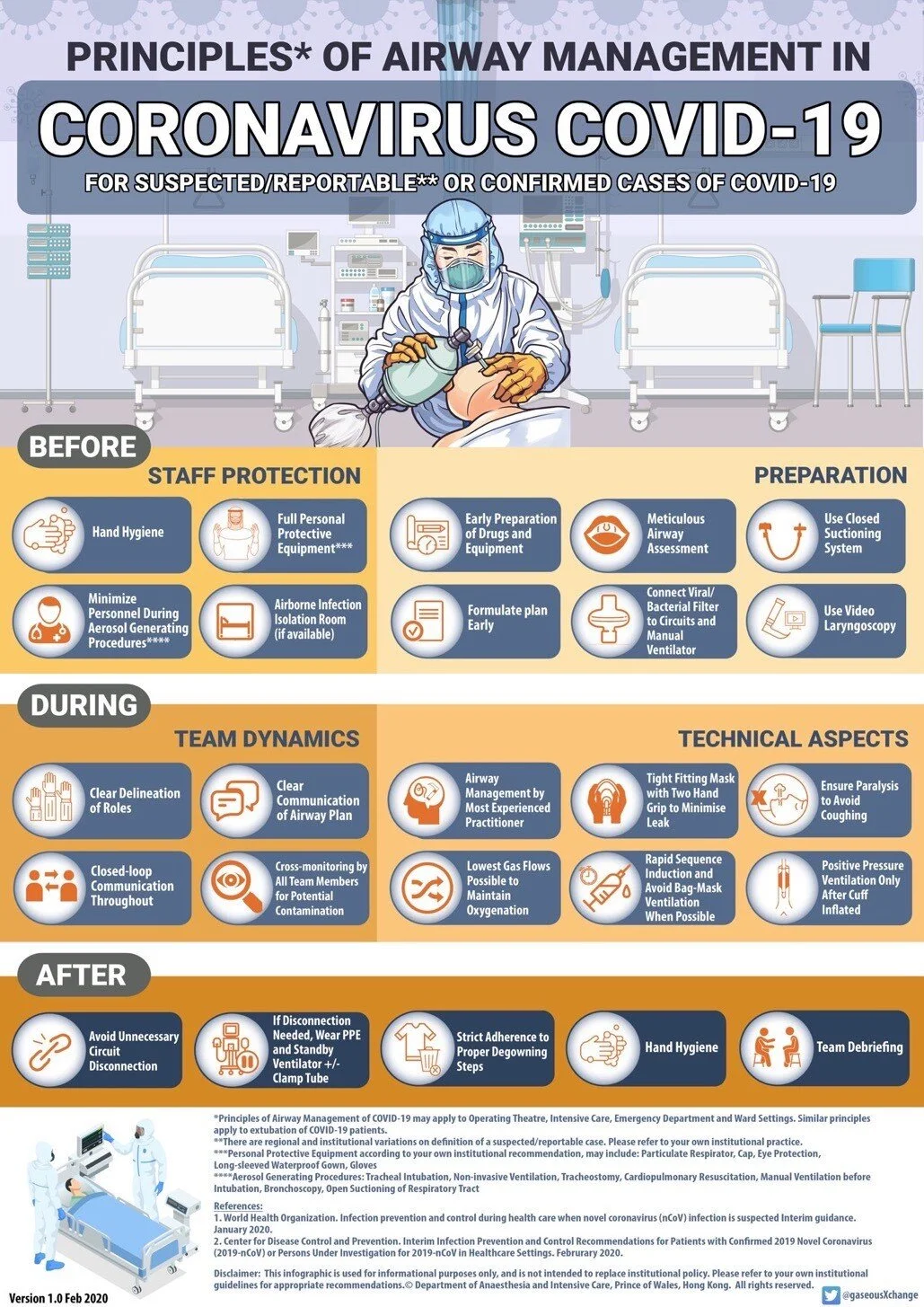
COVID 19 and infection control
We learnt that we are not well practiced in efficiently applying and removing PPE. Practice should improve this,
PPE for COVID 19 Aerosol Generating Procedures include gloves, gown, N95 mask, goggles/faceshield
With critical patients we should make all attempts to decrease aerosol generating procedures including: intubation, NIV, High flow NP, nebulisers. This might be at the expense of optimal preoxygentation
Removing PPE is a high risk time for contaminating ourselves… Take care!
There is loads of information in the FOAM world such as https://emcrit.org/ibcc/covid19/ This is a great read but have some caution asthese are blog posts and new information on COVID 19 is changing daily.