
26 May 2021 - Admin
Teaching this week will be over Zoom:
https://zoom.us/j/5981463478?pwd=RThaZzNkL2w5bldBMlNHeE1zZFFaZz09
Meeting ID: 598 146 3478
Passcode: 2021
Program
1000-1005: Welcome
1005-1030: Coding and PAS — Sabrina Lunardi
1030-1130: Documentation — Andrew Walby
1130-1140: Recap of last week’s Paediatric teaching — Alasdair Williamson
1140-1200: Break
1200-1300: Organ Donation — Shannesey Voros & Bernadette Hickey
1300-1310: ECG of the Week — Marty Lynch
1310-1315: Image of the Week — Kat Watson
1315-1400: Break-out Fellowship Written Group — Alex Handrinos
1315-1400hr: How to Get the Most Out of Your WBAs — Claudiu Radeanu
Summary
Thank you to Andy King for this week’s program summary.
Documentation in the ED
The ED gets funding based on the number and type of admitted patient treated by the hospital — coders will translate all diagnoses / procedures from our documentation for costing / funding. Here are some tips for how to optimise funding:
Uncertain of diagnosis? Use probably / suspected / likely
Document causal relationship (“due to / secondary to / caused by”), e.g. SBO secondary to laparoscopic procedure
Cannot code “on background of / associated with”
Avoid abbreviations / acronyms / symbols
In case you ever end up in court…
Document your designated role, i.e. Registrar
Document important positive and negative findings
Document things not done and why not
Document the name of doctors with whom you consult
Document handovers
Document follow-up plans, e.g. LMO within a certain timeframe
Document if the patient is NESB or if you took the history from someone else
Organ donations
Everybody approaching end of life in ED should be referred to the Donate Life coordinators at SVHM
Don’t extubate in ED
The senior available next of kin can consent to donation — if none can be found, a medical officer can consent provided there is prior evidence of intention to donate
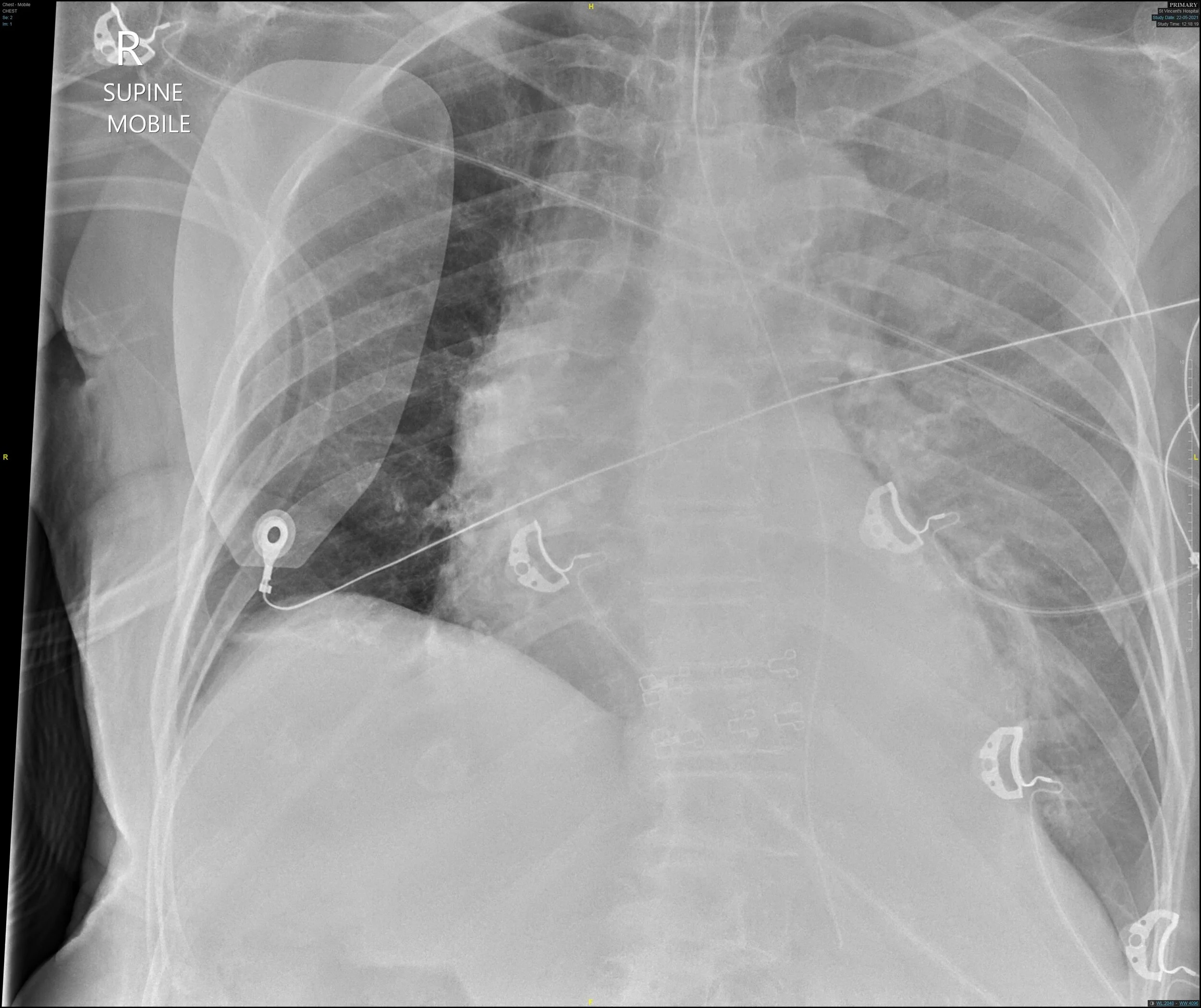
Image of the Week
84F presents with unconscious collapse/out of hospital arrest.
ECG of the Week
15 month old male brought in by parents for fever and parents noticed shaking and screaming while asleep.
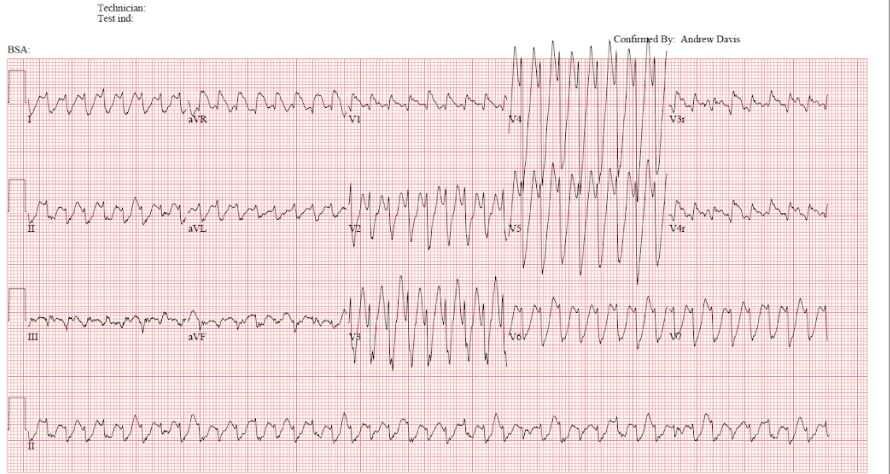
1) What does this ECG show?
Monomorphic ventricular tachycardia (rare in children)
Description: Broad complex regular tachycardia at a rate of approximately 250bpm with dysynchronous p waves and signs of AV dissociation.
2) What are the treatment options?
Pharmacological vs DCR
Amiodarone 5mg/kg
2J/kg via synchronised direct current cardioversion
This was his ECG post-treatment with amiodarone:
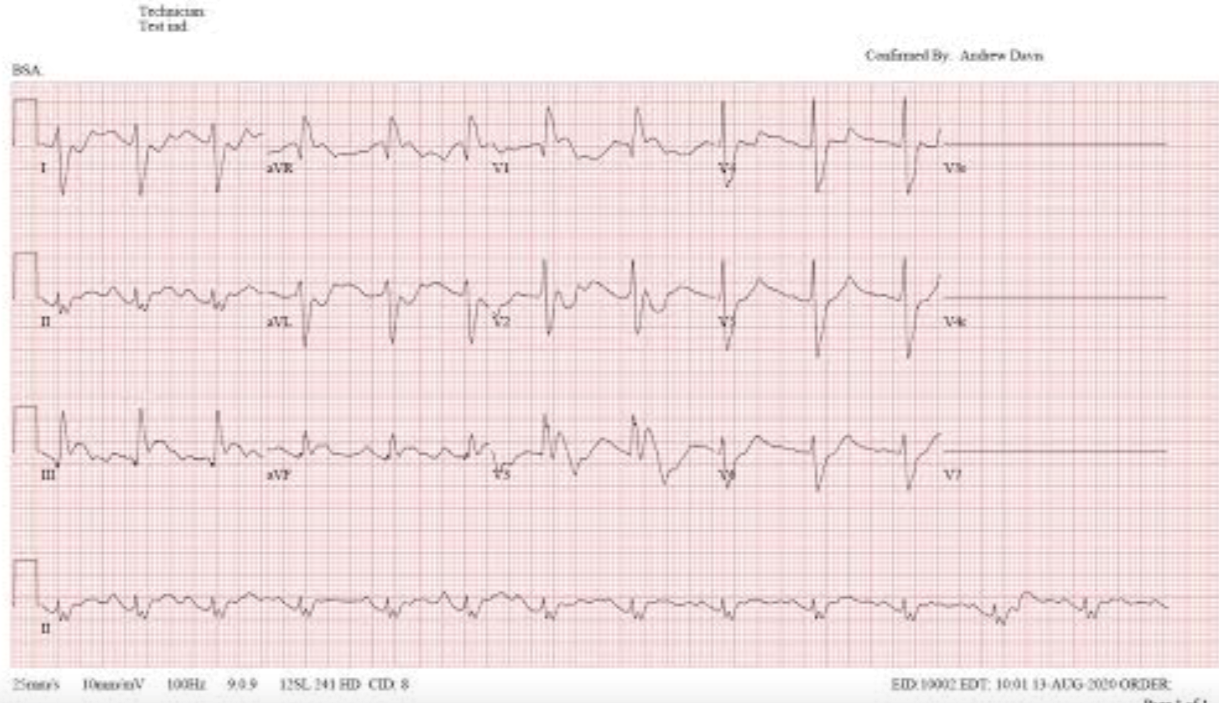
3) What syndrome does this ECG show?
Brugada syndrome
Coved ST elevation in Lead V1 consistent with Type 1 Brugada patten
Combined with documented VT = Brugada syndrome
NOTE: It’s subtle! Changes are possibly obscured by amiodarone administration.
4) What medications should be avoided?
See brugadadrugs.org for full list.
Commonly used ED drugs to definitely avoid:
Propofol
Bupivicaine
Flecainide
Procainamide
Commonly used ED drugs to preferably avoid:
Metoclopramide
Ketamine
Tramadol
Amiodarone
Lignocaine
Phenytoin
Fexofenadine (Telfast antihistamine)
Propranolol
Verapamil
Things that patient might have taken which may induce Brugada syndrome: alcohol, marijuana, cocaine